Made in Auburn, CA
Made in the USA since 1993. Over 32 years of fixture engineering.
BAA and BABA Compliant
Federal-ready procurement for GSA, USACE, Department of Defense, and state DOTs.
7-Year Factory Warranty
Full coverage on driver, LEDs, and housing. 100,000-hour L70 rated.
Stop Playing in the Dark.
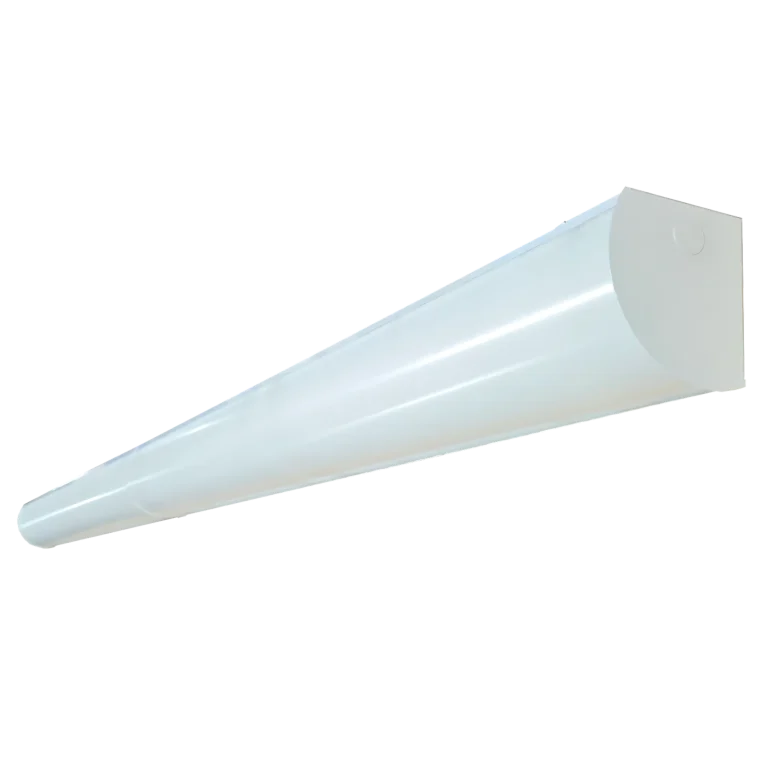
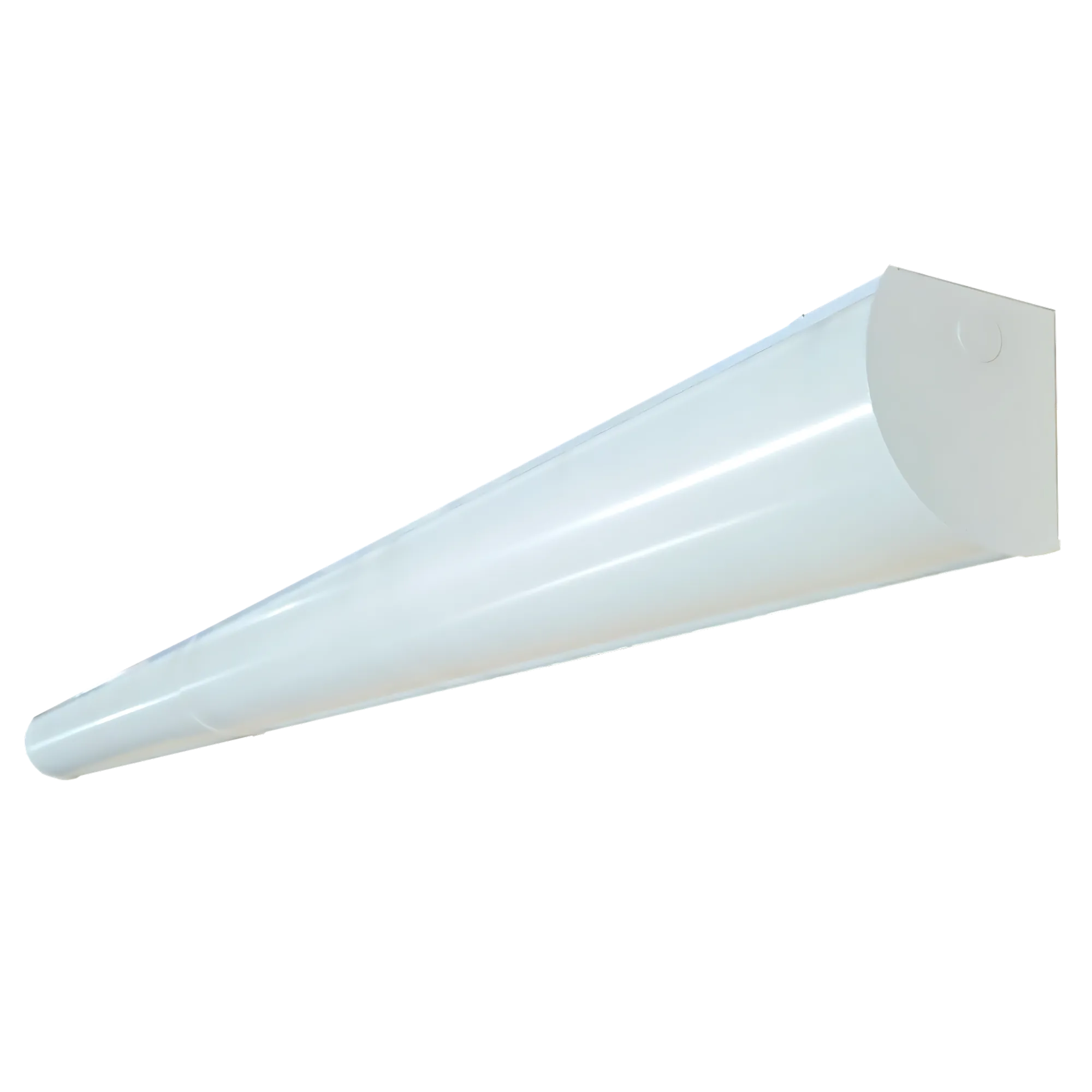
Standard “warehouse” lighting destroys depth perception and blinds players during lobs. 1st Source Lighting has re-engineered the indoor court experience. Our PCS Series Linear Pickle Light utilizes proprietary LBAT (Lens Beam Augmentation Technology) and a 60/40 Direct-Indirect split to transform your facility from a cavern into a luminous stadium.
See the Ball: High vertical illuminance for tracking spin.
Save the Eyes: Zero “pixel brightness” glare during overhead smashes.
Fill the Court: Linear “sheets of light” replace patchy round spotlights.
At 1st Source Lighting, pickleball and tennis lighting is a core pillar for our business. We’ve lit thousands of facilities over three decades, with all our indoor fixtures built from the ground up for these sports. We are the Premier Indoor Sport court lighting manufacturer in the United States. We follow ASBA (American Sports Builders Association) and USAP standards closely, they’re identical in fundamentals, but our guide goes deeper with practical recommendations.
USAP outlines three lighting types: 100% Direct, 100% Indirect, and Direct/Indirect (their top recommendation, and ours too!).
Lumen Output: 38,000 Lumens (Elite Class I Standard)
Distribution: 60% Downlight / 40% Uplight (Volumetric Fill)
Lens: LBAT Curved Diffused Acrylic (No Glare/No Yellowing)
Mounting: Angle Bracket Mount (Tilt-ready for precision)
Warranty: 5-Year Performance Guarantee
Lighting a pickleball court is not about hitting a foot-candle number on the floor. It is about Visual Psychophysics—how the human eye processes contrast and motion. Most facilities fail because they rely on UGR (Unified Glare Rating), a metric designed for office workers looking at computers, not athletes looking up at 25-foot ceilings.
The lighting industry relies on UGR to measure glare. The problem? The UGR formula ignores lens diffusion. It calculates glare based on average luminance but fails to account for the “harshness factor” of individual LED diodes.
The Reality: A standard “low glare” fixture can still blind a player because it creates a “Zonal Cone of Luminance”—a beam of intense light directly beneath the fixture.
The Solution: We don’t just lower the number; we change the physics. Our fixtures use LBAT (Lens Beam Augmentation Technology). By using a curved, highly diffused acrylic lens, we spread the photon emission over a massive surface area (8 feet vs. 11 inches). This allows a player to look through the light source without retinal saturation.
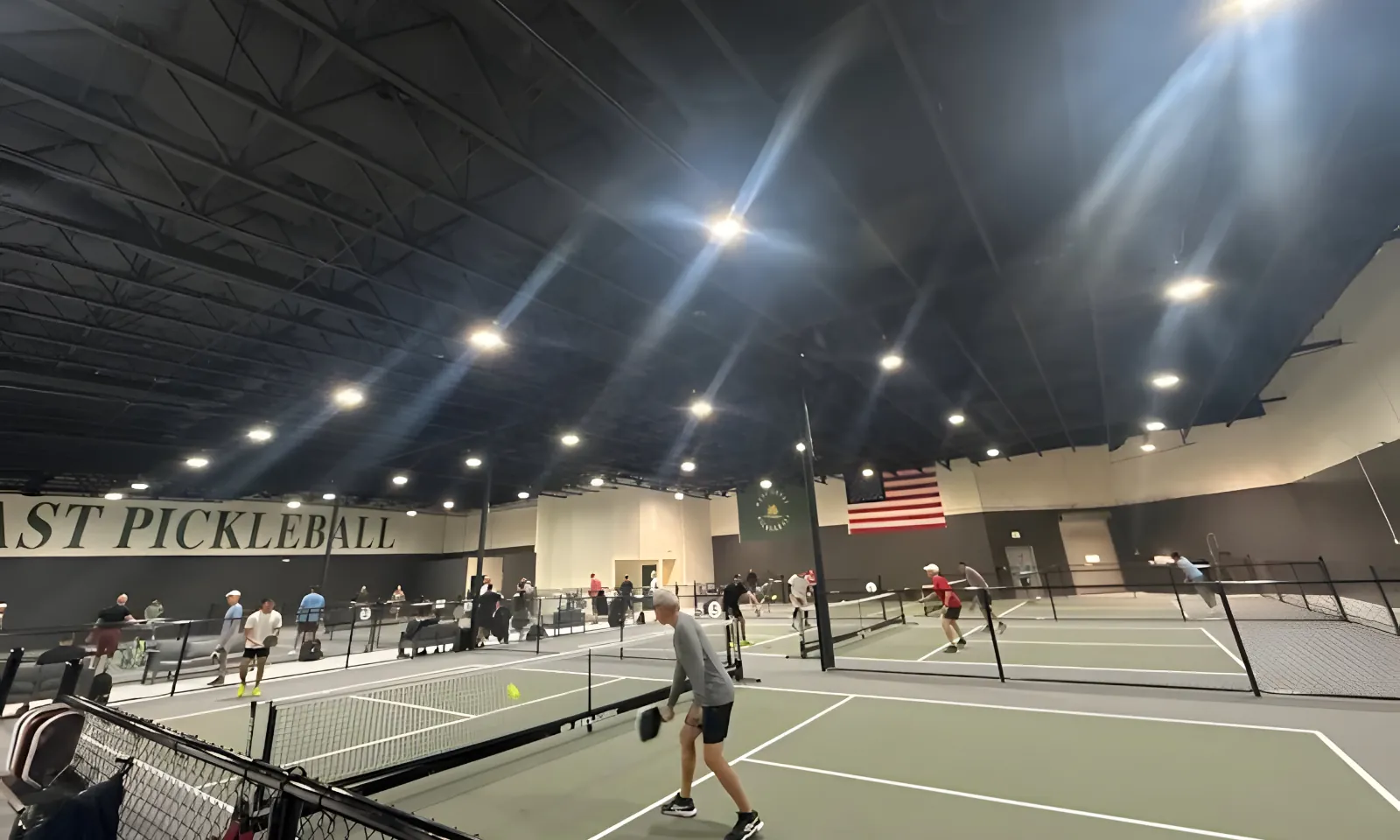
Have you ever lost the ball in the “black void” above the lights? That is the Cave Effect.
The Cause: 100% Direct Lighting (UFOs). When the floor is bright (50fc) and the ceiling is black (0fc), your pupil constricts to block the floor brightness. When you look up for a lob, your pupil cannot dilate fast enough to capture the dark ceiling. The ball vanishes.
The Fix: 60/40 Direct-Indirect Split. We send 40% of the light up. This turns your white ceiling into a giant reflector. The eye stays adapted, the pupil remains stable, and the ball stands out clearly against the illuminated background.
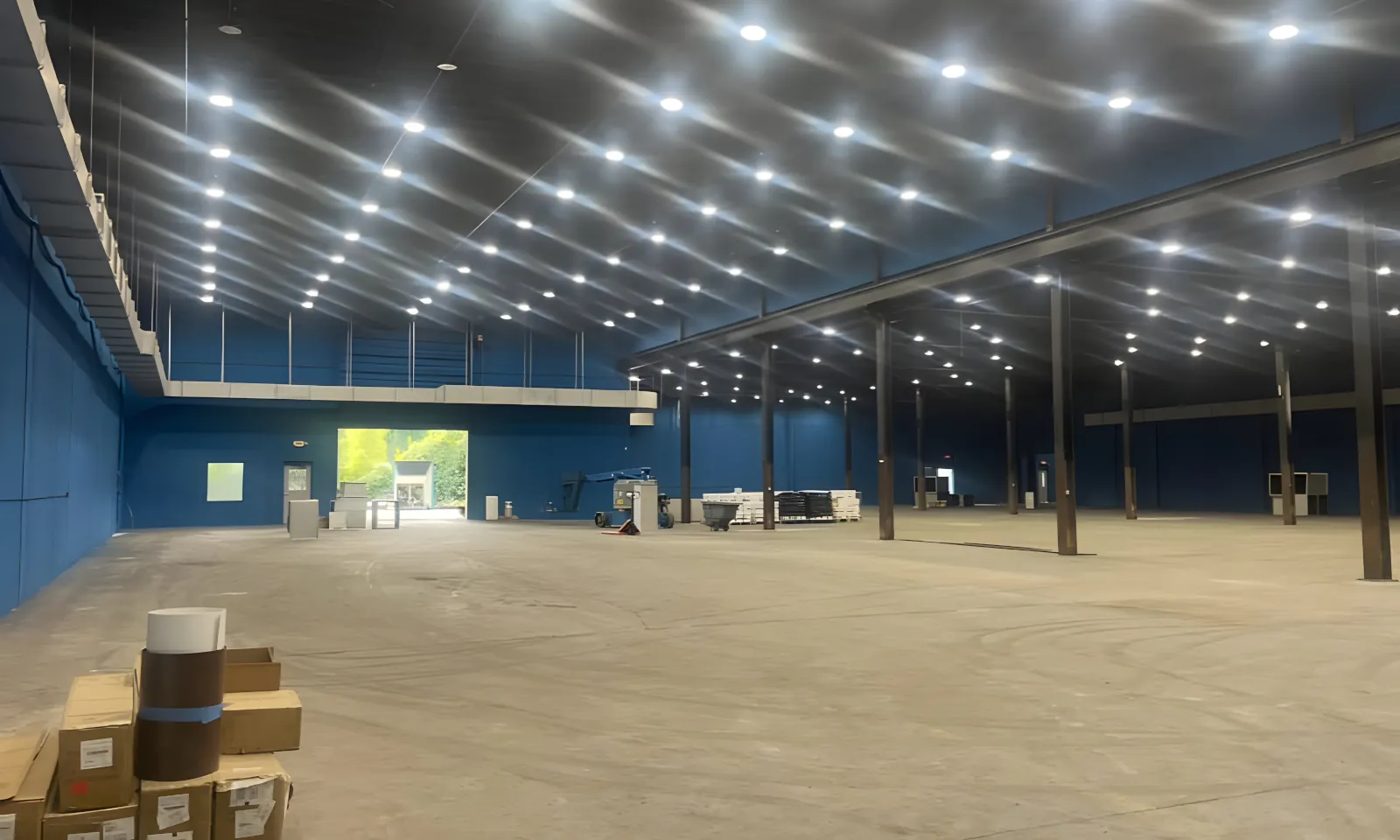
Pickleball courts are rectangles. Round “UFO” fixtures project conical beams. Due to this inherent fact, UFO high bays produce a scalloping effect and have a reduction in vertical foot candles associated with their beam angles.
The Scallop Effect: Round beams must overlap to cover the court. This creates “hot spots” (double brightness) and “dark valleys” (shadows). It creates a strobing effect as you run. This also increases the overall fixture count to make up for the scalloping to meet the correct average footcandle reading. Artificially inflating the overall average to keep the Max/Min uniformity ratios in check. Not only this, but the increase in fixture count further exacerbates the problem. More fixtures, more scalloping, more glare!
Linear Continuity: Our 8-foot linear fixtures produce a Rectangular 200+ Degree distribution. When mounted in rows, they create a continuous “sheet of light.” We achieve Max/Min uniformity ratios of <1.7 (Class I Professional Standard), ensuring the corner of the baseline is just as bright as the kitchen. This also offers Elite Vertical Uniformity to ensure the ball is continuously lit throughout the entire court. High or Low.
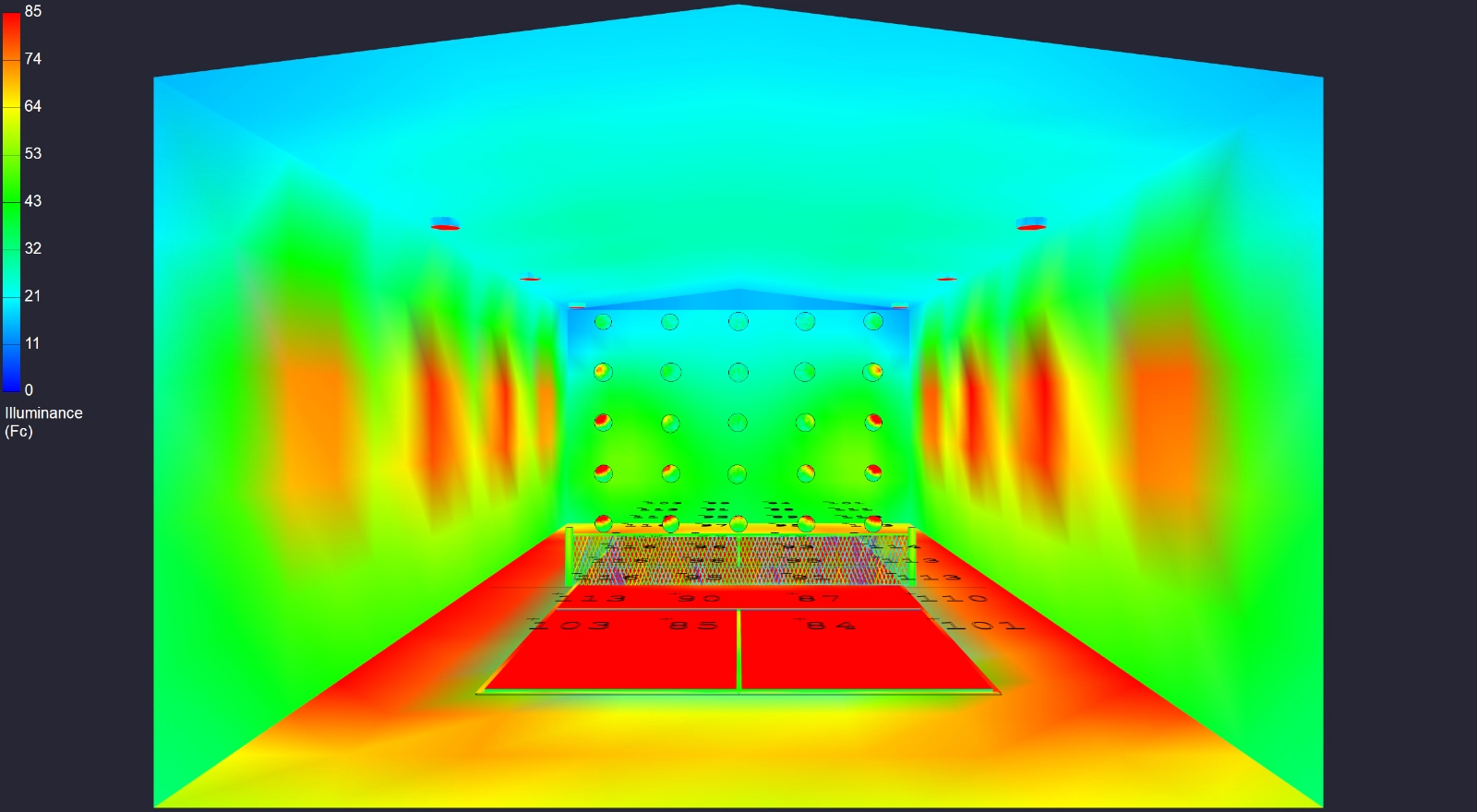
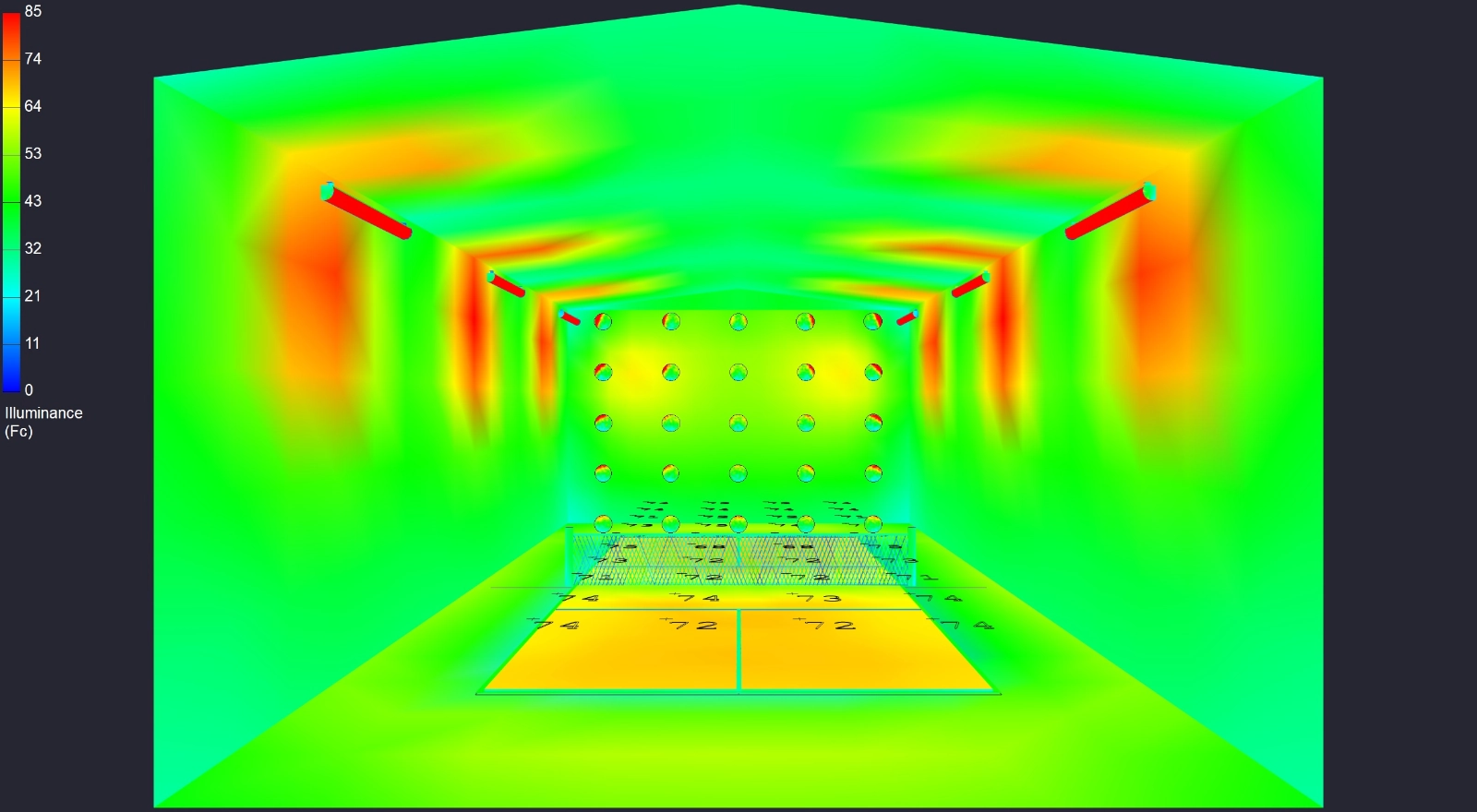
Shown below is the difference between UFO High Bays and 1st Source Lighting’s Linear Direct-Indirect Lighting System. You can clearly see the top image where the spheres that are modeled are not all showing ‘red’. Compared to the bottom image, our lighting system clearly illuminates each rendered sphere. This proves the point that UFO High Bays are the wrong fixture for Indoor Pickleball Lighting Applications. Its clear cut!
To the untrained lighting expert eye, what does this represent? The spheres were modeled in a standard size pickleball court, 25 to be exact, in a vertical grid that would show the different positions a pickleball might be in during a live game. The red on the sphere represents a well lit ball with a high amount of contrast between the highest illumination and lowest in green/blue (in this case, top and bottom). The spheres at the top are mostly blue with a little green which represents a ball that is 1/4 of the brightness compared to the spheres towards the netting. One very important fact is if the illuminance of the sphere/pickleball is the same as the background illuminance, that means you lose sight of the ball durning play! This proves that the UFO high bays are the wrong fixture for the application.
The same scenario as the above rendering shows the same spheres lit from top to bottom, even the top spheres show red and yellow indicating a high amount of light illuminating the pickleball. What this means is that wherever the pickleball is within the vertical play area, the ball will be sufficiently lit! This means, a better play experience by being able to properly judge the spin of the ball, and most importantly not being blinded by a fixture that was improperly specified.
In the saturated market of 2026, players are sophisticated. They gravitate toward facilities where they play their best.
Lighting is consistently the #1 player complaint in indoor facilities. When lighting is uneven (scalloped), players experience “shadow anxiety”—a hesitation caused by the inability to track the ball’s speed and spin in dark zones.
The Business Impact: Players may not articulate why they dislike a court, but they vote with their wallets. Facilities with “Gold Standard” lighting report higher retention rates because players simply play better.
The Fix: Our linear system eliminates shadows and strobing, creating a “cloudy day” effect that players describe as “high-definition” vision.
You cannot host sanctioned pro tournaments (PPA/APP) or generate revenue from live streaming with “warehouse” lighting.
The Requirement: Broadcast-quality play requires Class I Standards (75+ foot-candles) and high vertical illuminance to ensure the ball doesn’t blur on camera.
The ROI: Investing in Class I capable lighting (like the BAY Series) future-proofs your facility, allowing you to bid for lucrative tournaments and leagues that generic facilities cannot host.
While Direct-Indirect fixtures have a higher upfront cost than cheap UFO imports, the Total Cost of Ownership (TCO) is lower.
Energy Slash: Replacing legacy technology with our LEDs cuts energy bills by 60-70% instantly.
Zero Maintenance: With a rated lifespan of >100,000 hours and a 10-year warranty, you eliminate the massive cost of renting lifts and closing courts to change dead bulbs.
Liability Reduction: Poor visibility leads to injuries (tripping, eye strain). Proper illumination is a primary risk mitigation strategy for facility insurance.
While the PCS Series Direct-Indirect is the universal “Gold Standard” for indoor pickleball, facility architecture varies. Whether you are lighting an air-supported dome, a luxury country club, or working with a strict retrofit budget, we have engineered solutions that prioritize visual performance.
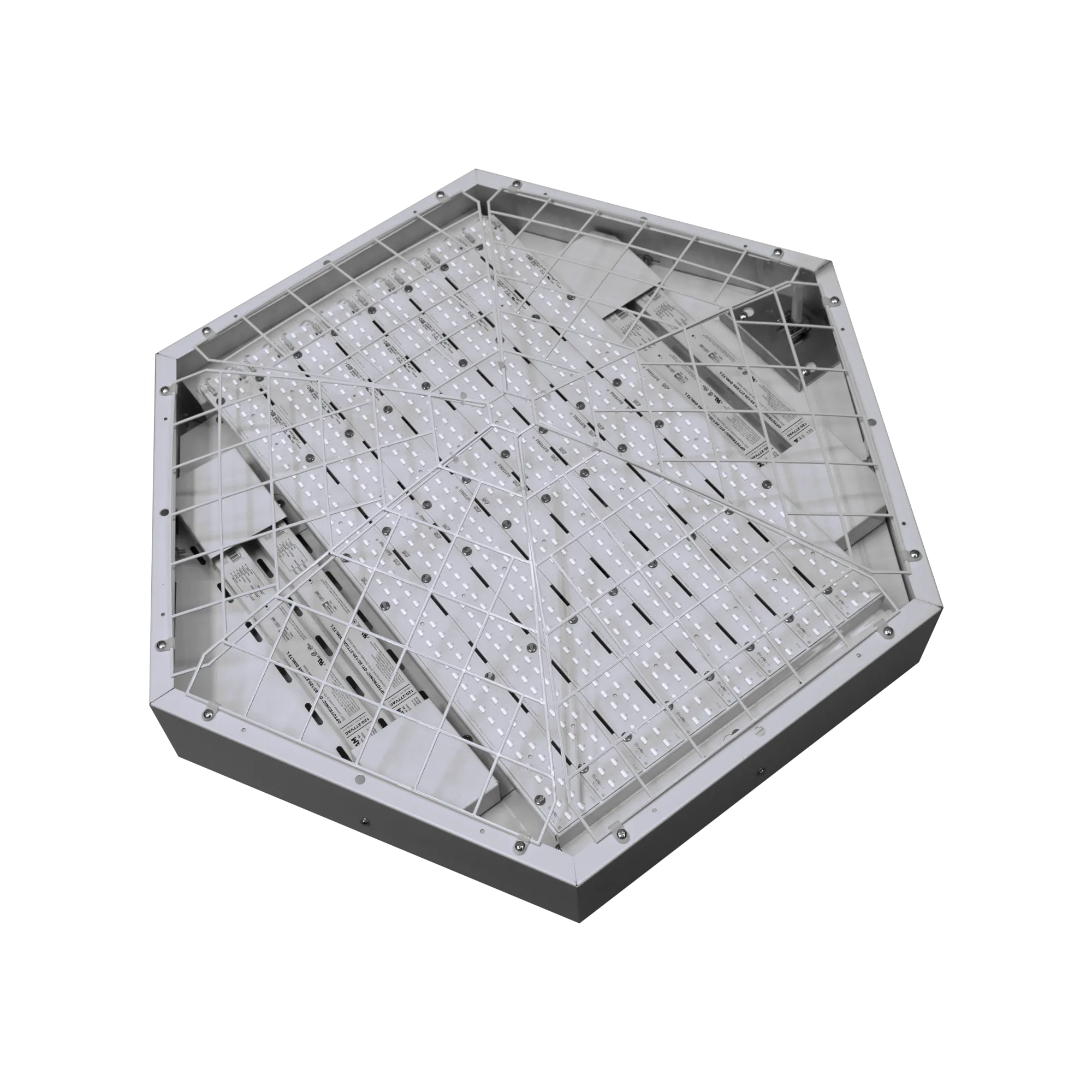
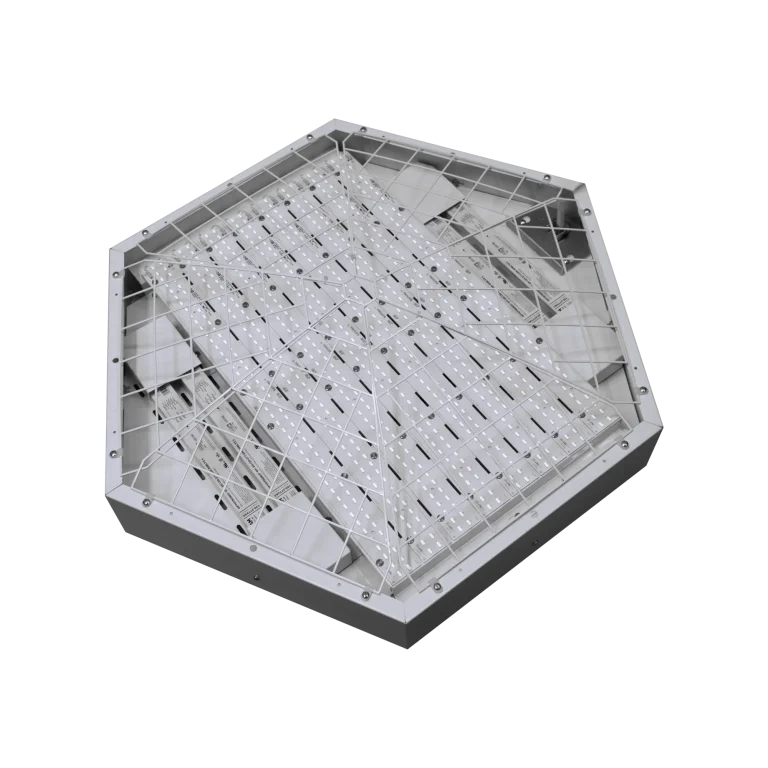
Best for: Tennis Conversions, Air Domes (Bubbles), & High Ceilings (>30ft)
Lumen Output: Up to 64,000 Lumens
Distribution: 100% Uplight
Lens: Zero Glare Uplight with Protective Wire Cage
Mounting: Single Point Cable or Pendant Mount
Warranty: 5-Year Performance Guarantee
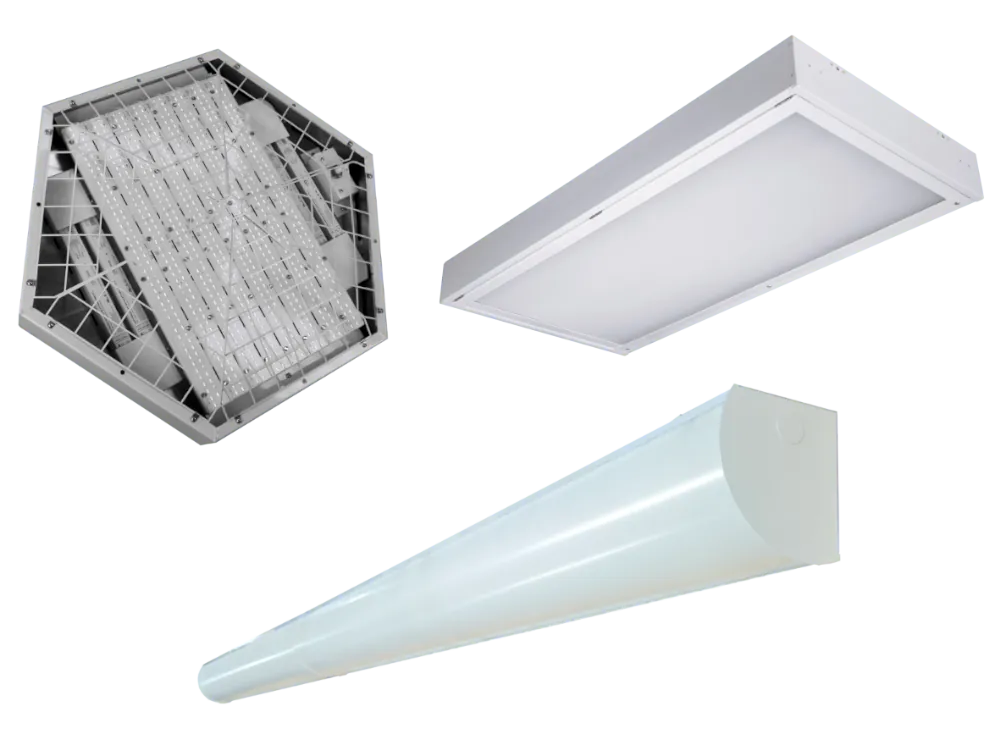
For facilities with reflective white ceilings or domes, the HEX Series offers the ultimate glare-free experience. By aiming 100% of the light upward, the ceiling becomes the light source, mimicking a cloudy day.
Best for: Low Ceilings (<20ft) & Glare Sensitivity
Lumen Output: Up to 27,000 Lumens
Distribution: 100% Downlight
Lens: High Diffusion Polycarbonate Lensing with low Glare
Mounting: Chain Hung or Surface Mount
Warranty: 5-Year Performance Guarantee
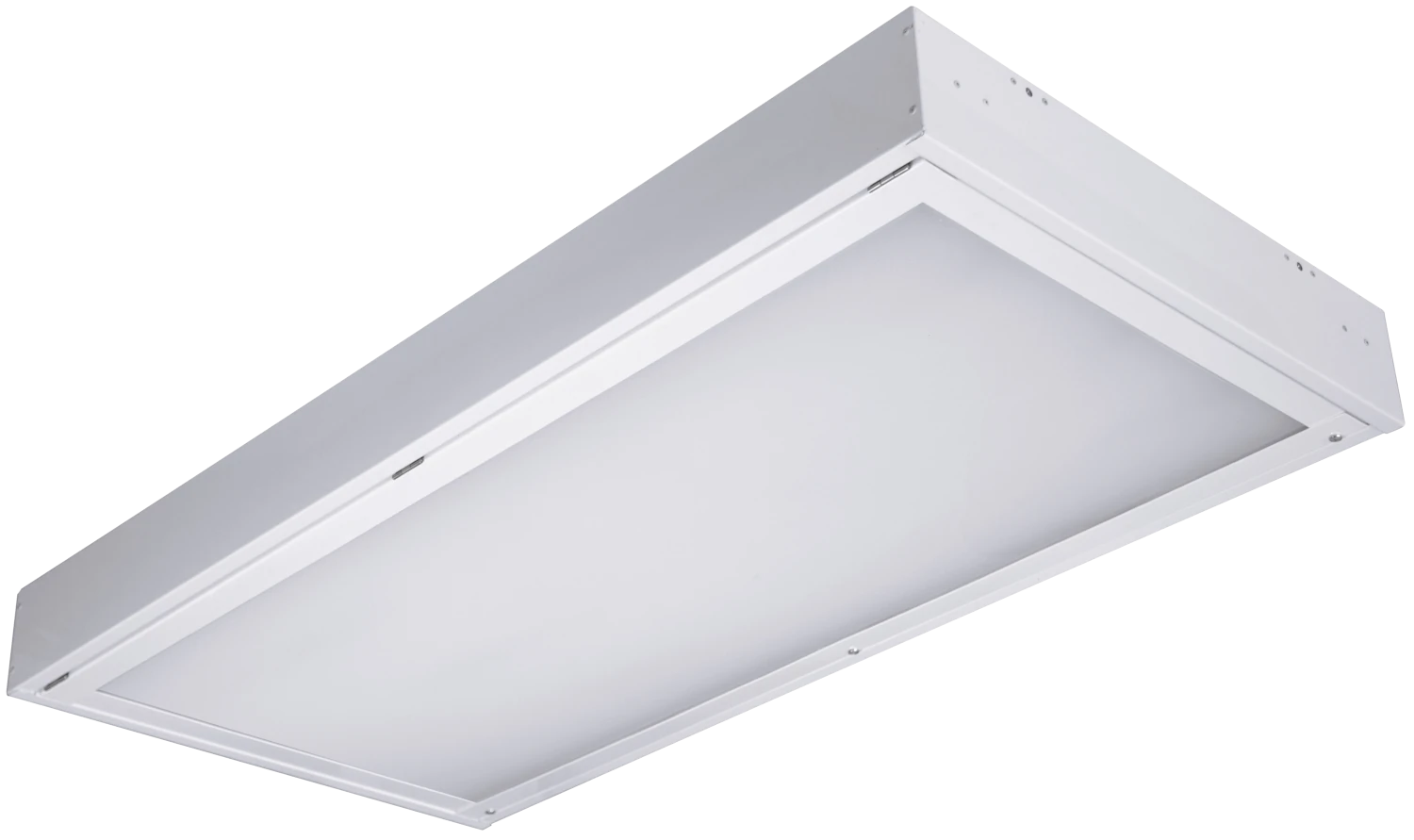
If your ceilings are too low for high bays, the Pickle Panel is the solution. It utilizes a deep housing design and a high-diffusion flat lens for Ultra-Low eye strain glare relief.
Best for: Country Clubs, Social Lounges, & Low-Ceiling Courts
Lumen Output: Varies By Length and Field Selectable CCT & Wattage
Distribution: Adjustable Uplight and Downlight
Lens: Continuous Seamless Diffused Low Glare Lens
Mounting: Architectural Cable Mount
Warranty: 5-Year Performance Guarantee
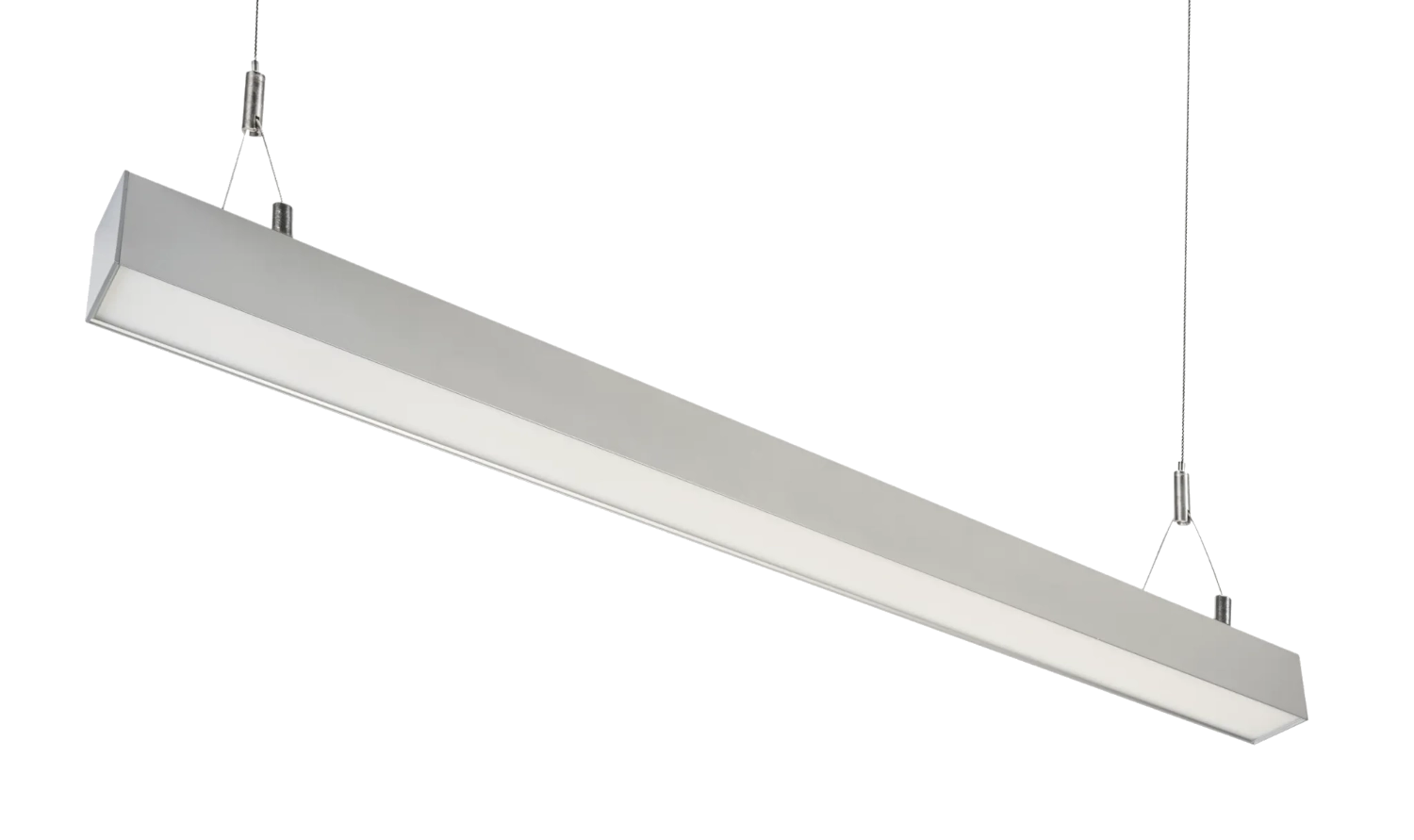
When the fixture needs to look as good as the light it produces. The LINTA Series features a sleek, architectural form factor with seamless snap-and-lock connections for continuous runs.
Best for: Rapid Retrofits & Tight Capital constraints
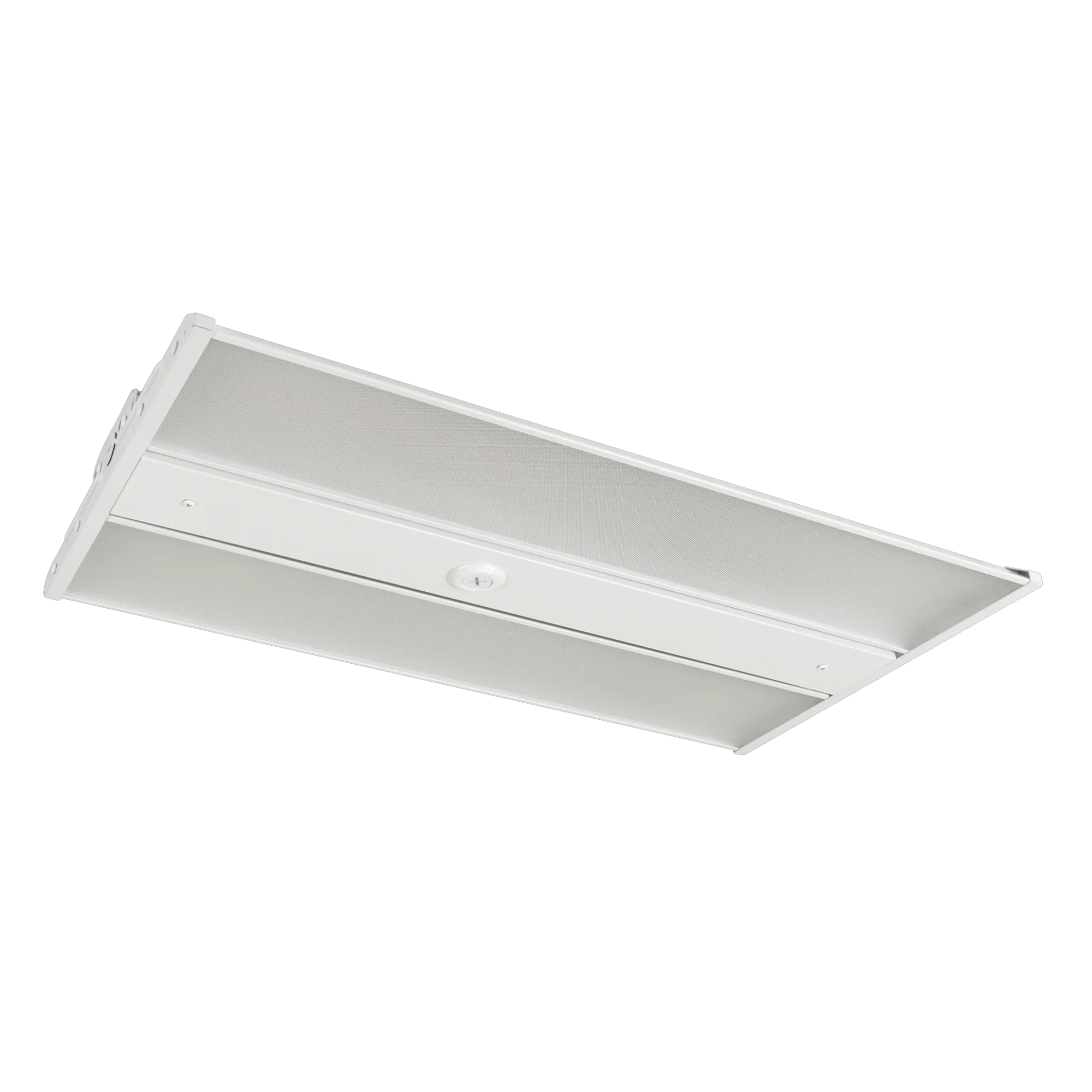
A functional linear solution for basic recreational play.
Lumen Output: Up to 30,600 Lumens
Distribution: 100% Downlight
Lens: Medium Diffusion Lens
Mounting: Chain Hung, Surface Mount, etc.
Warranty: 5-Year Performance Guarantee
Trade-off: Uses standard frosting rather than LBAT diffusion. Higher glare potential than our premium lines, but significantly better uniformity than round fixtures.
NOT RECOMMENDED for Pickleball
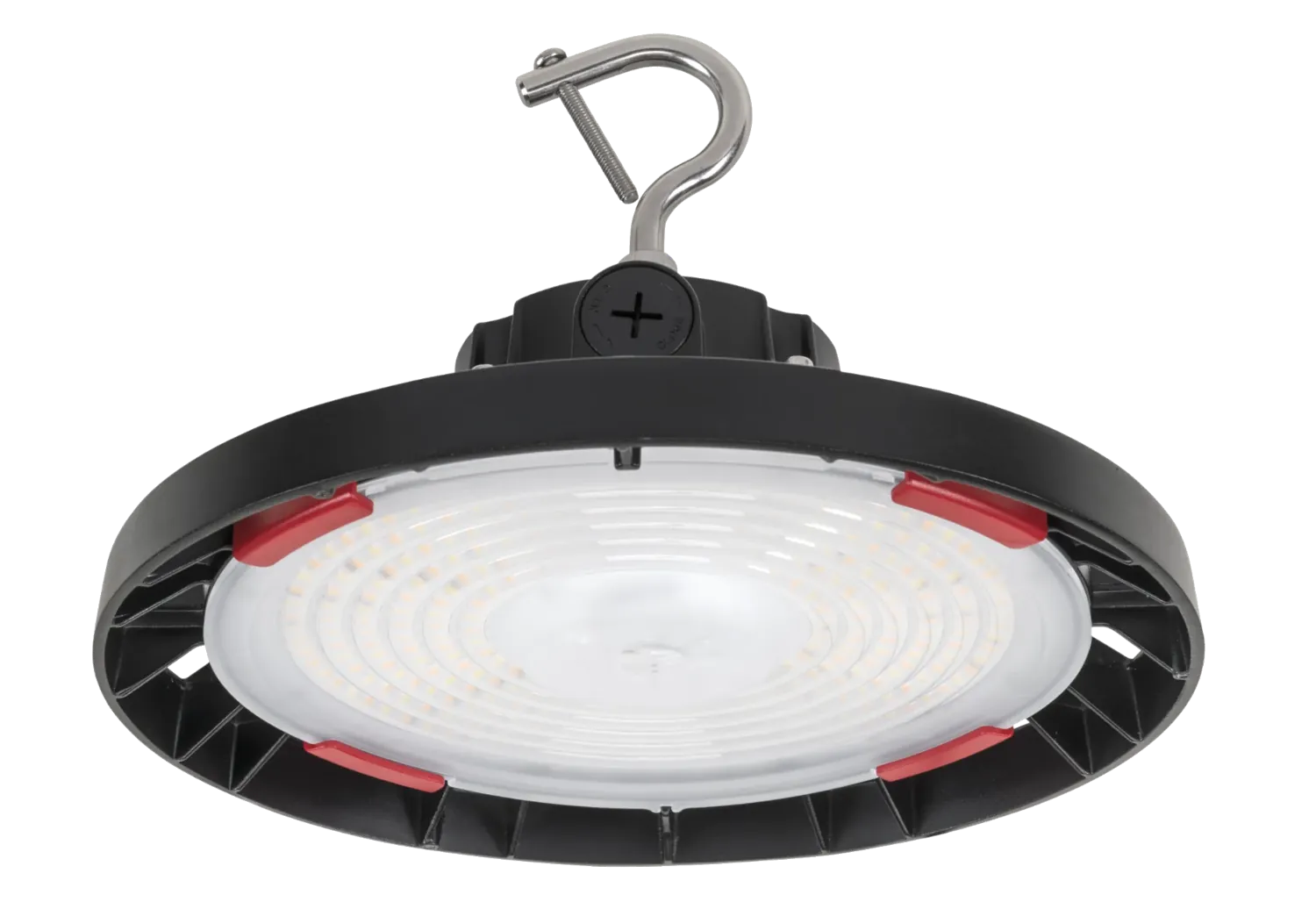
We sell UFOs for warehouses, but we advise against them for pickleball.
The Problem: They emit light from a small, intense circle (11″ diameter). This creates extreme “pixel brightness” that blinds players during lobs.
The Scallop Effect: Their conical beam shape creates hot spots and dark corners on a rectangular court.
Our Advice: If you care about player retention and safety, choose Linear Continuity over Round Intensity.
Trade-off: Uses standard frosting rather than LBAT diffusion. Higher glare potential than our premium lines, but significantly better uniformity than round fixtures.
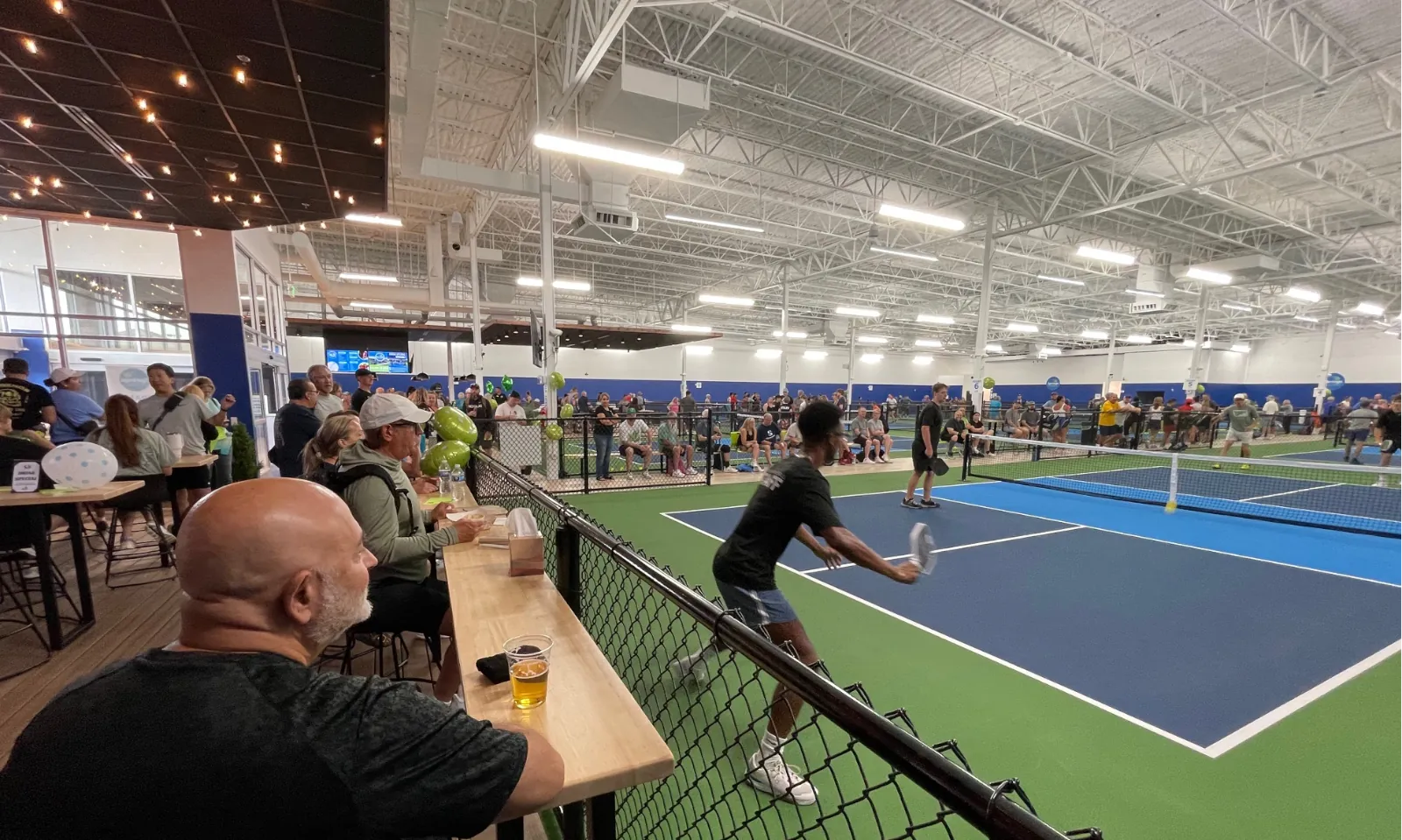
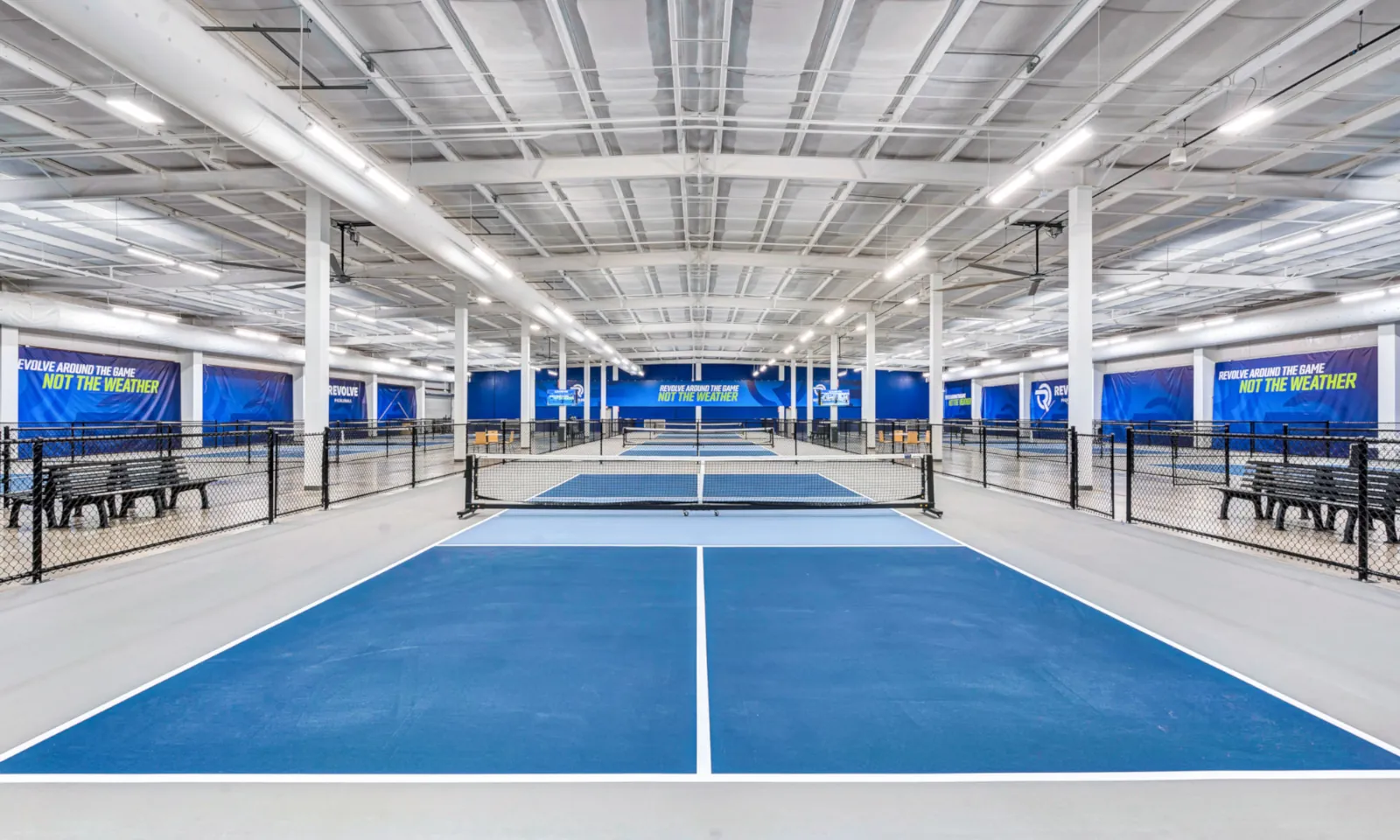
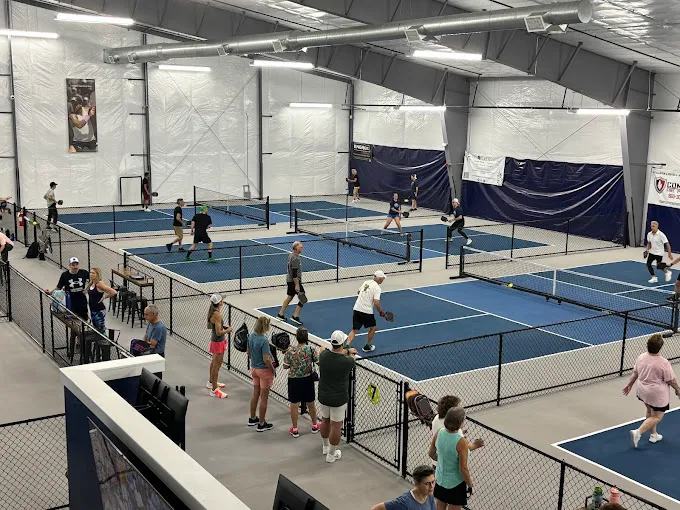
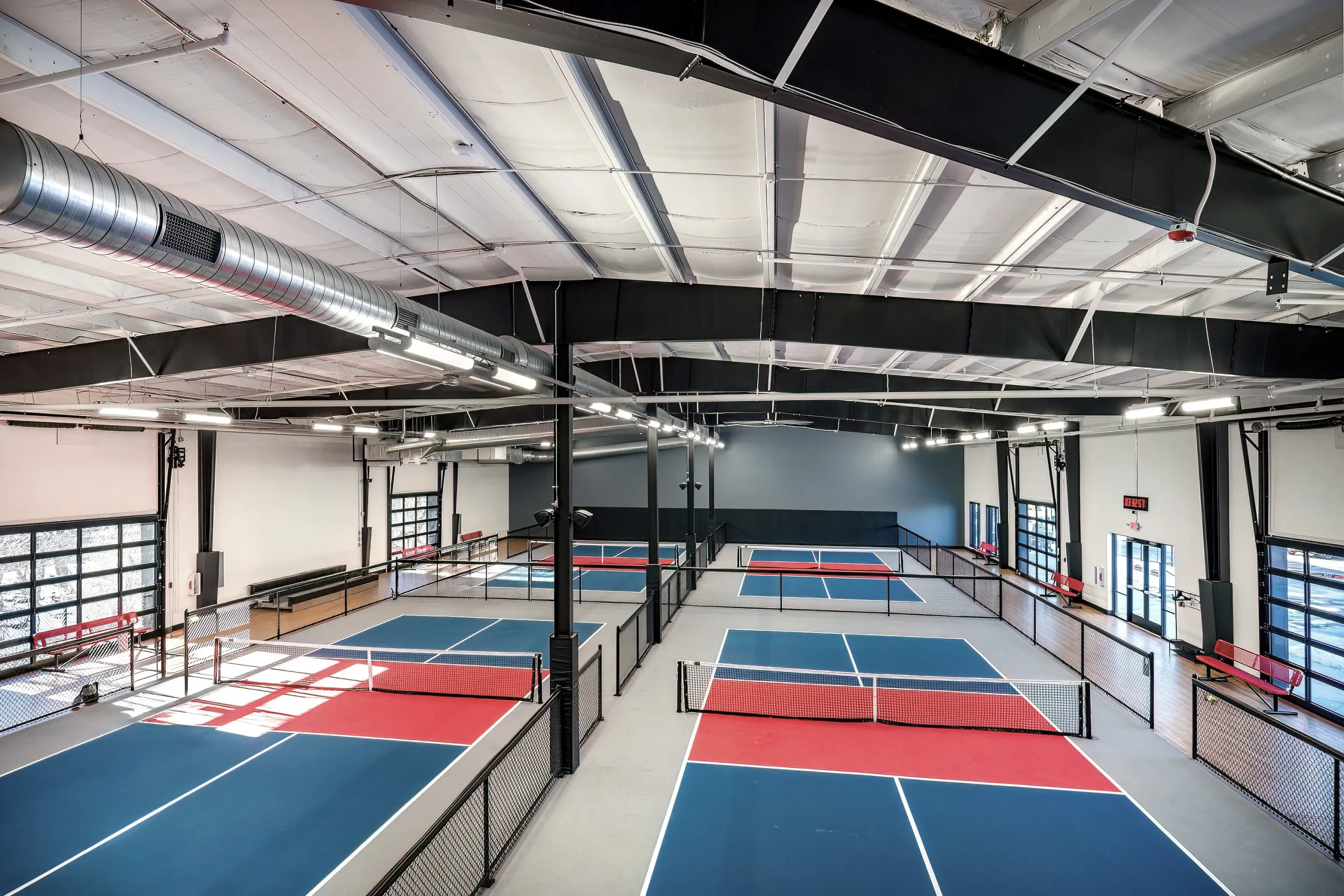
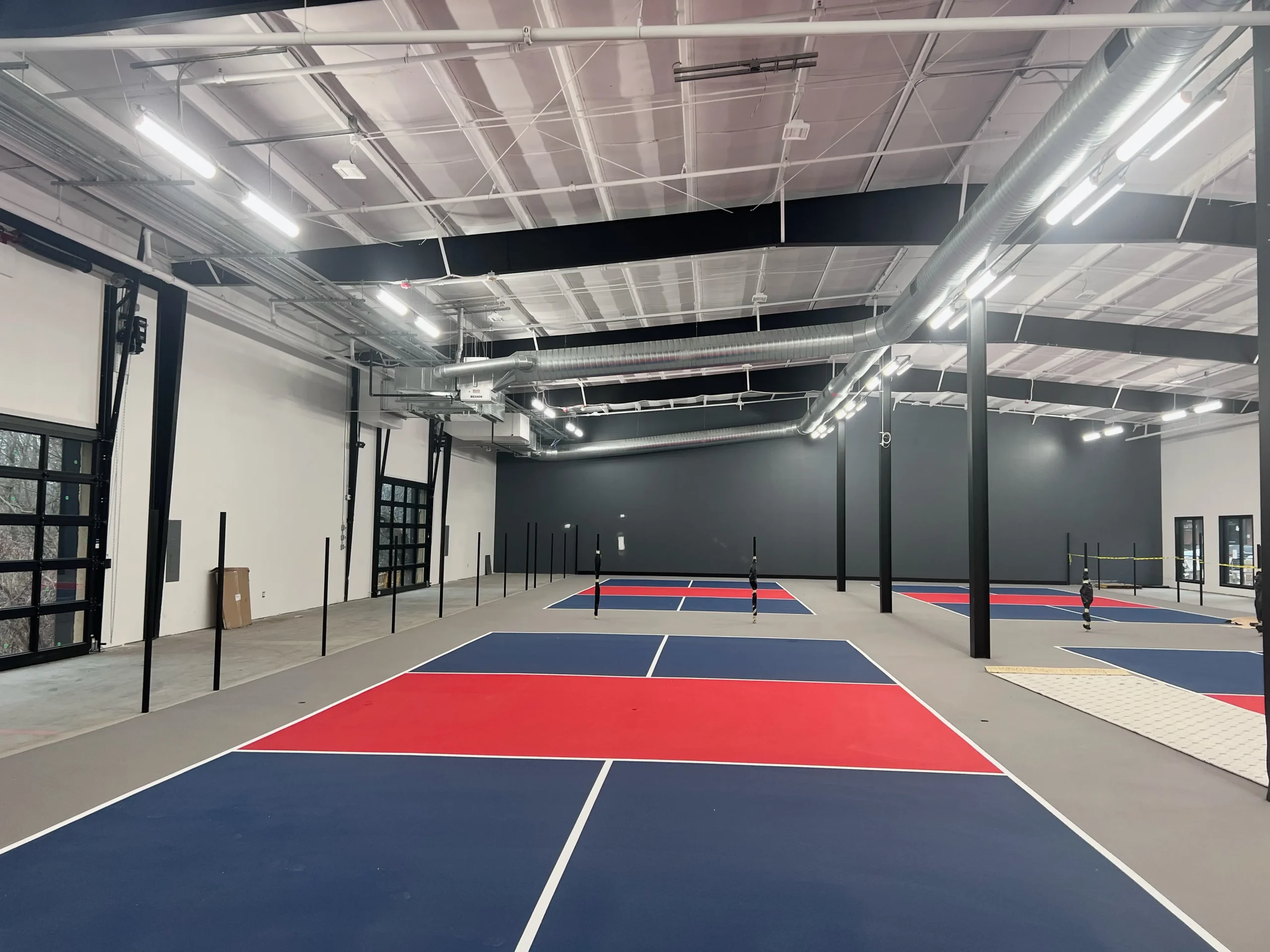
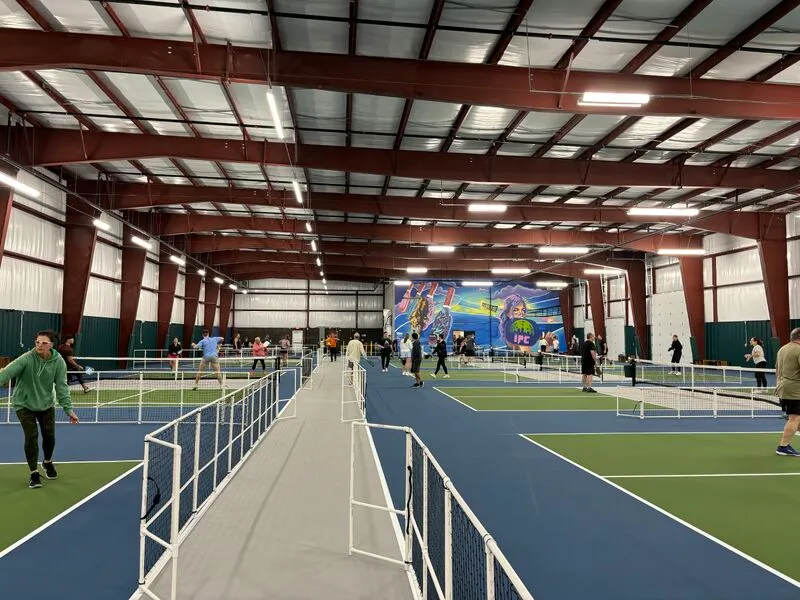
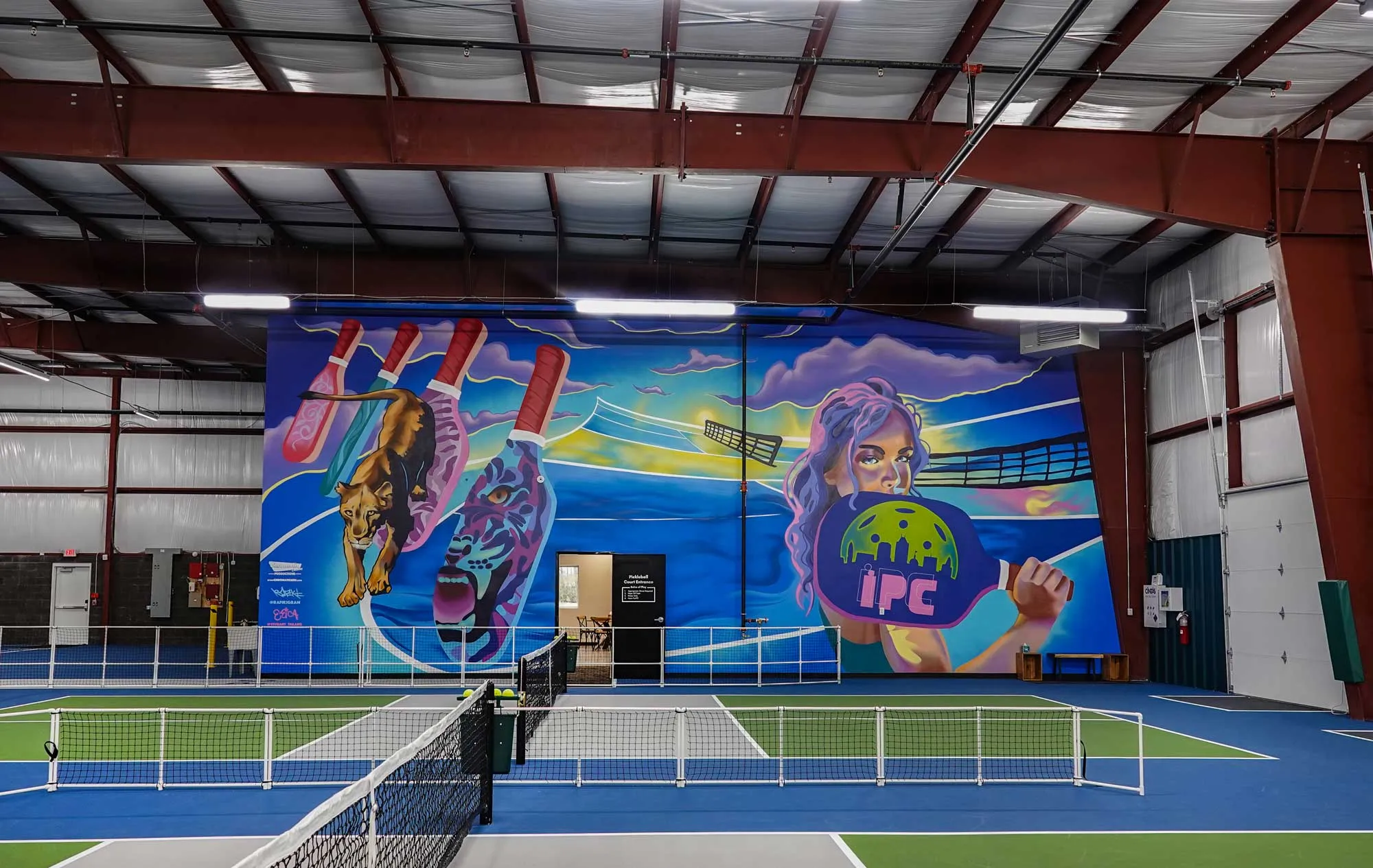
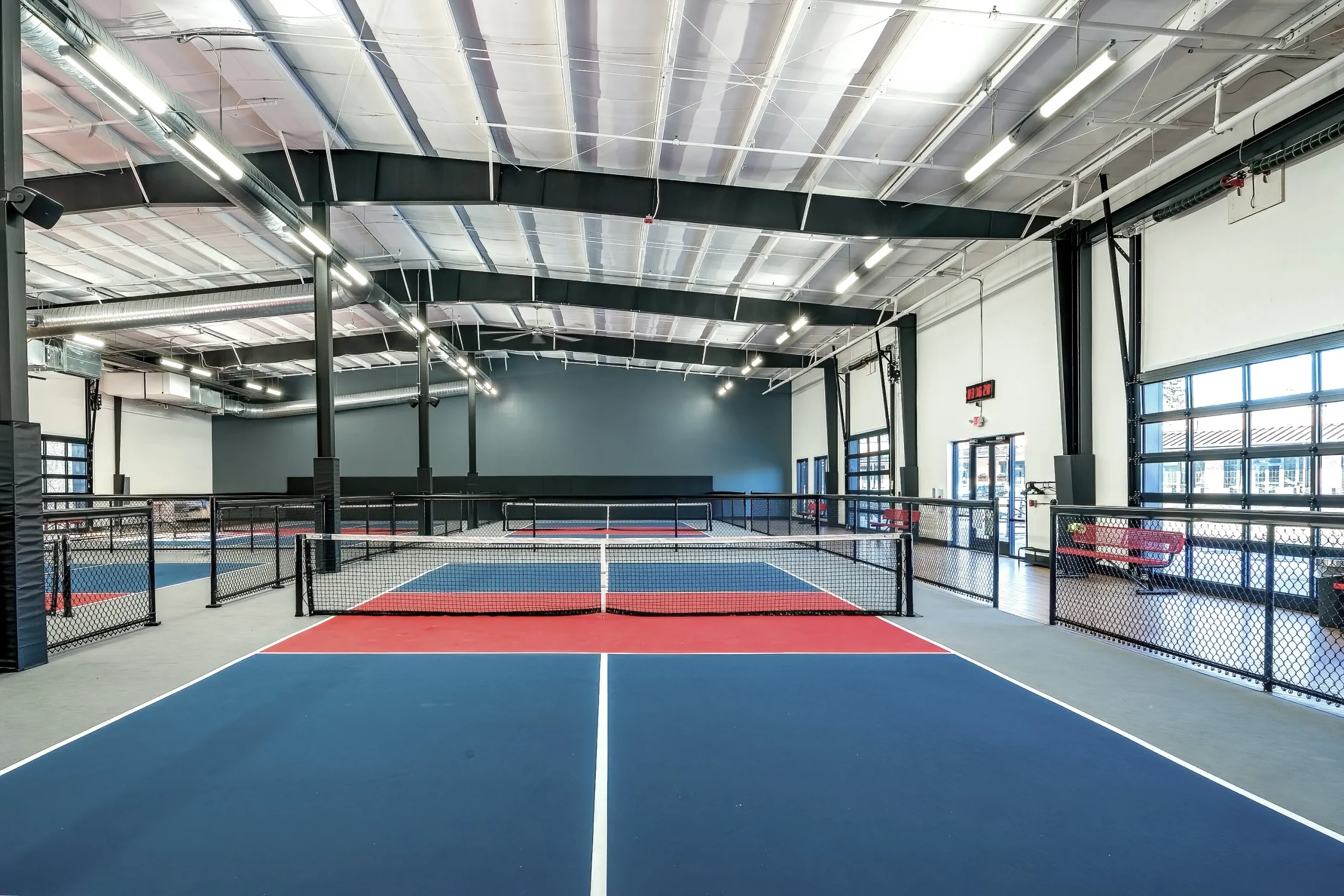
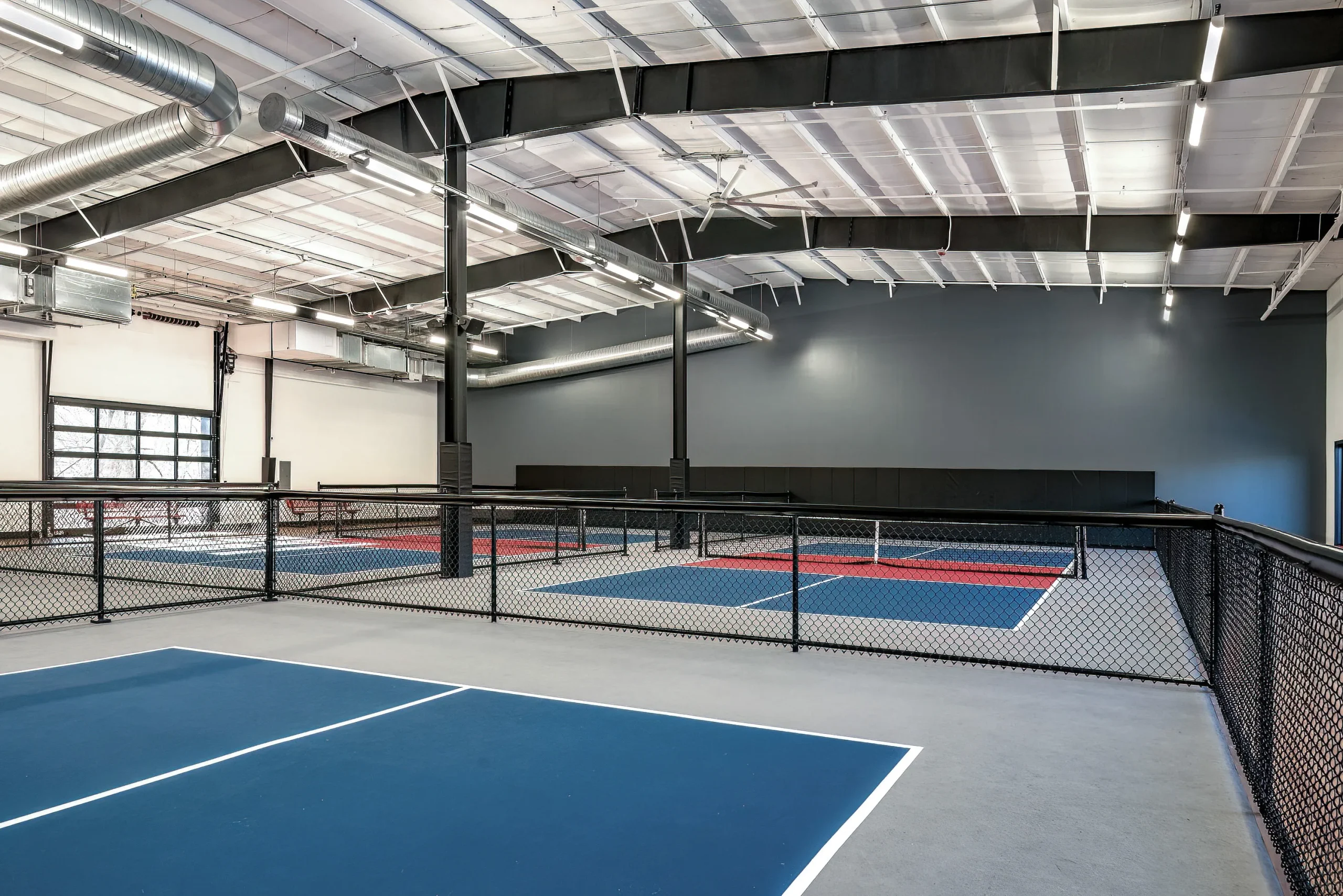
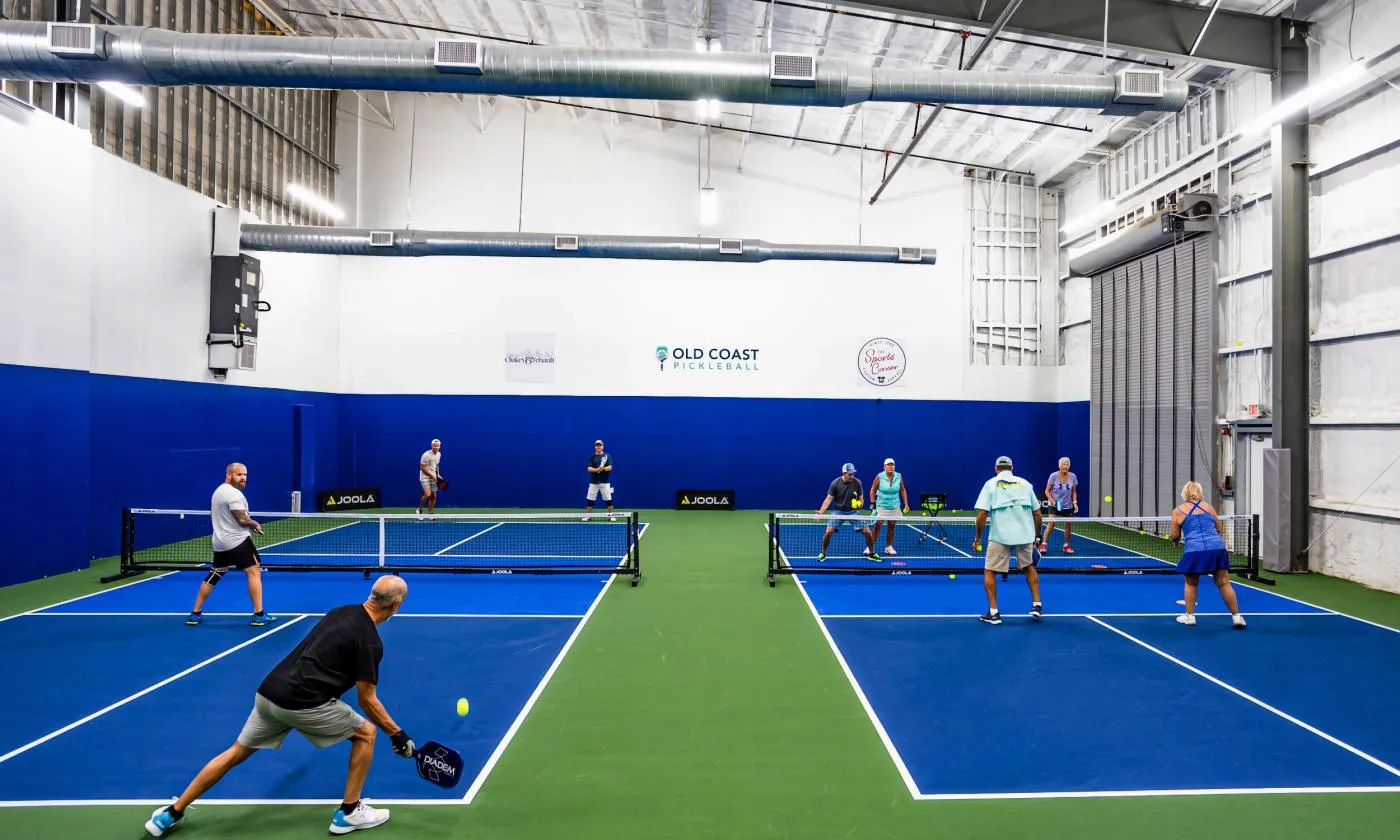
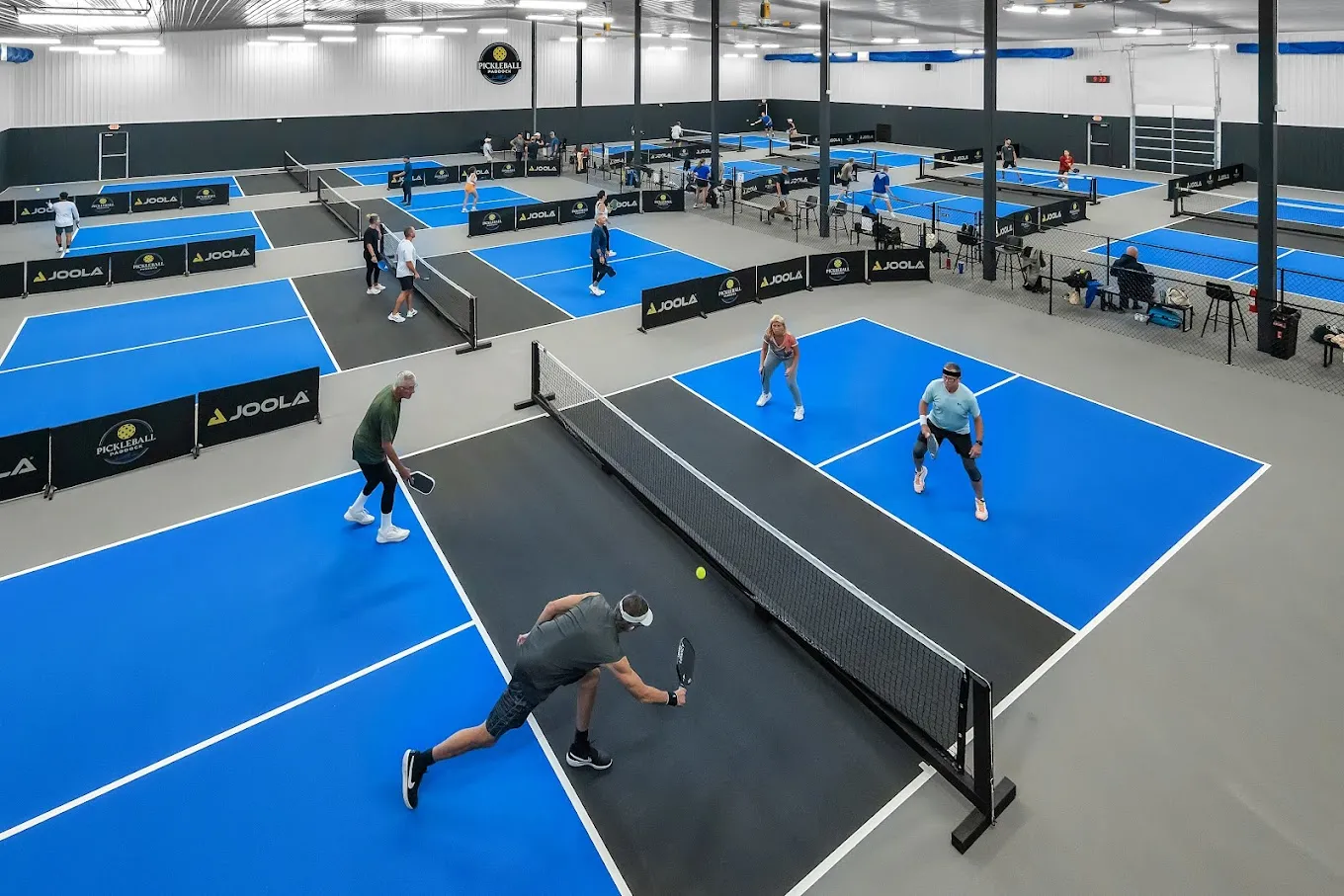
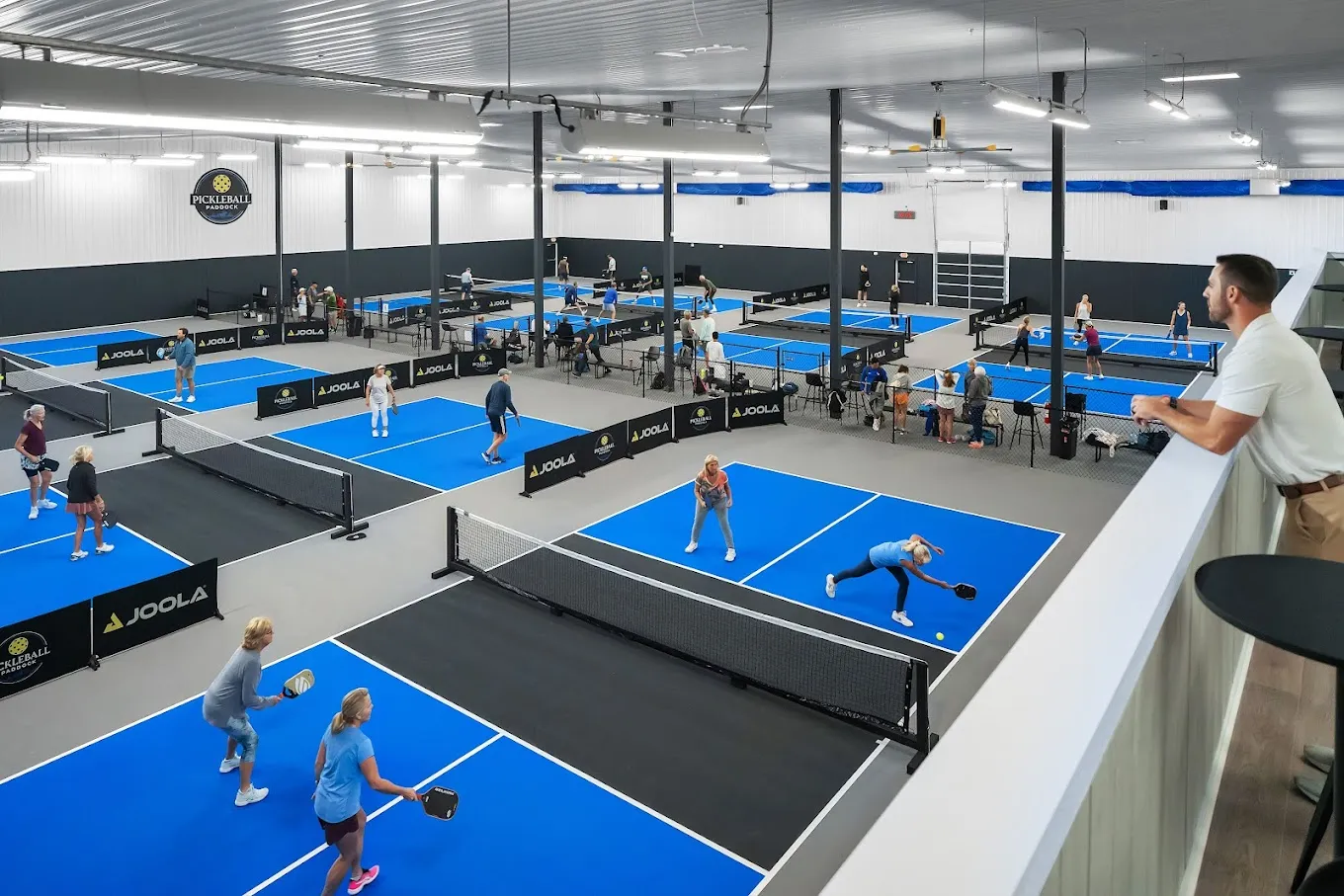
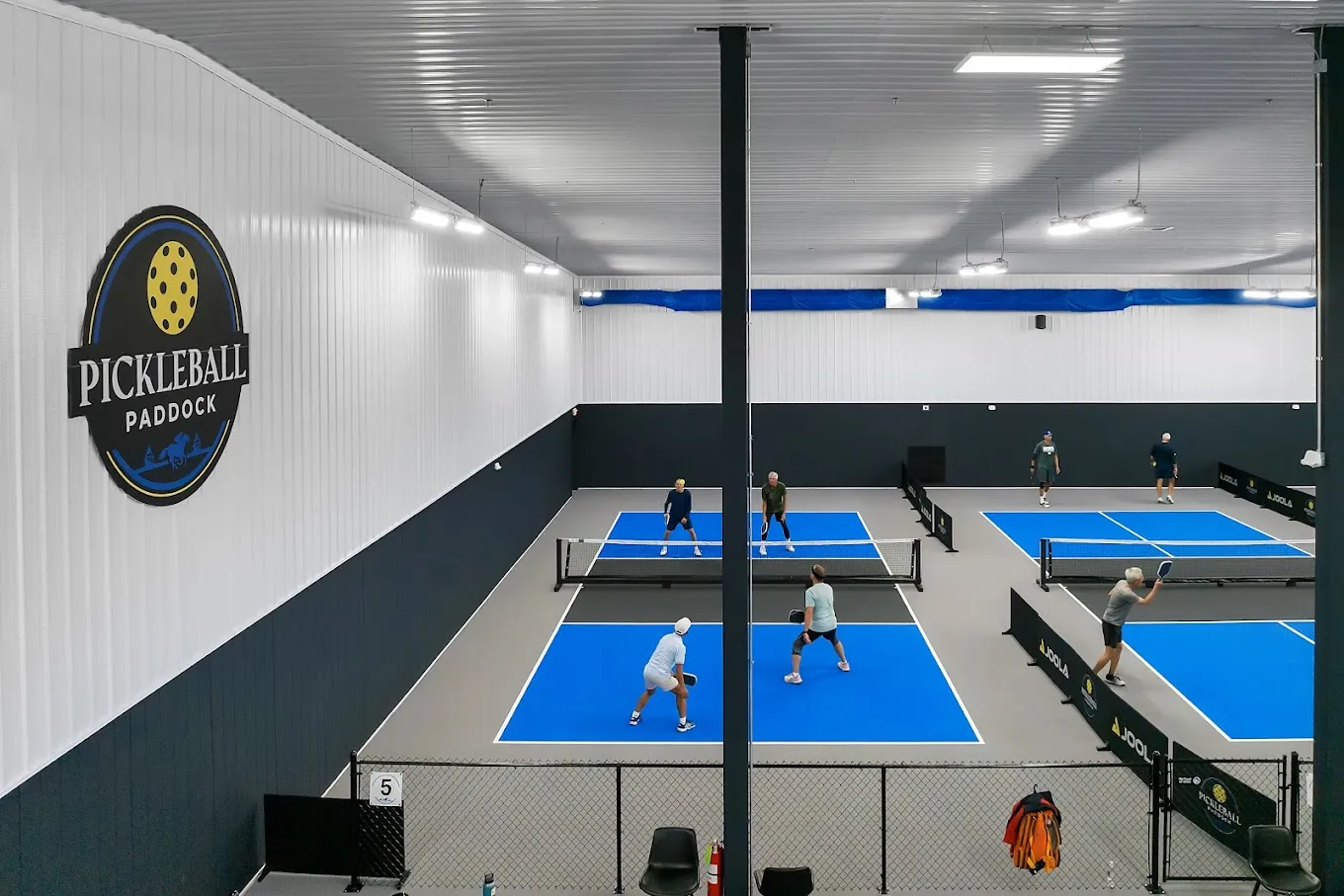
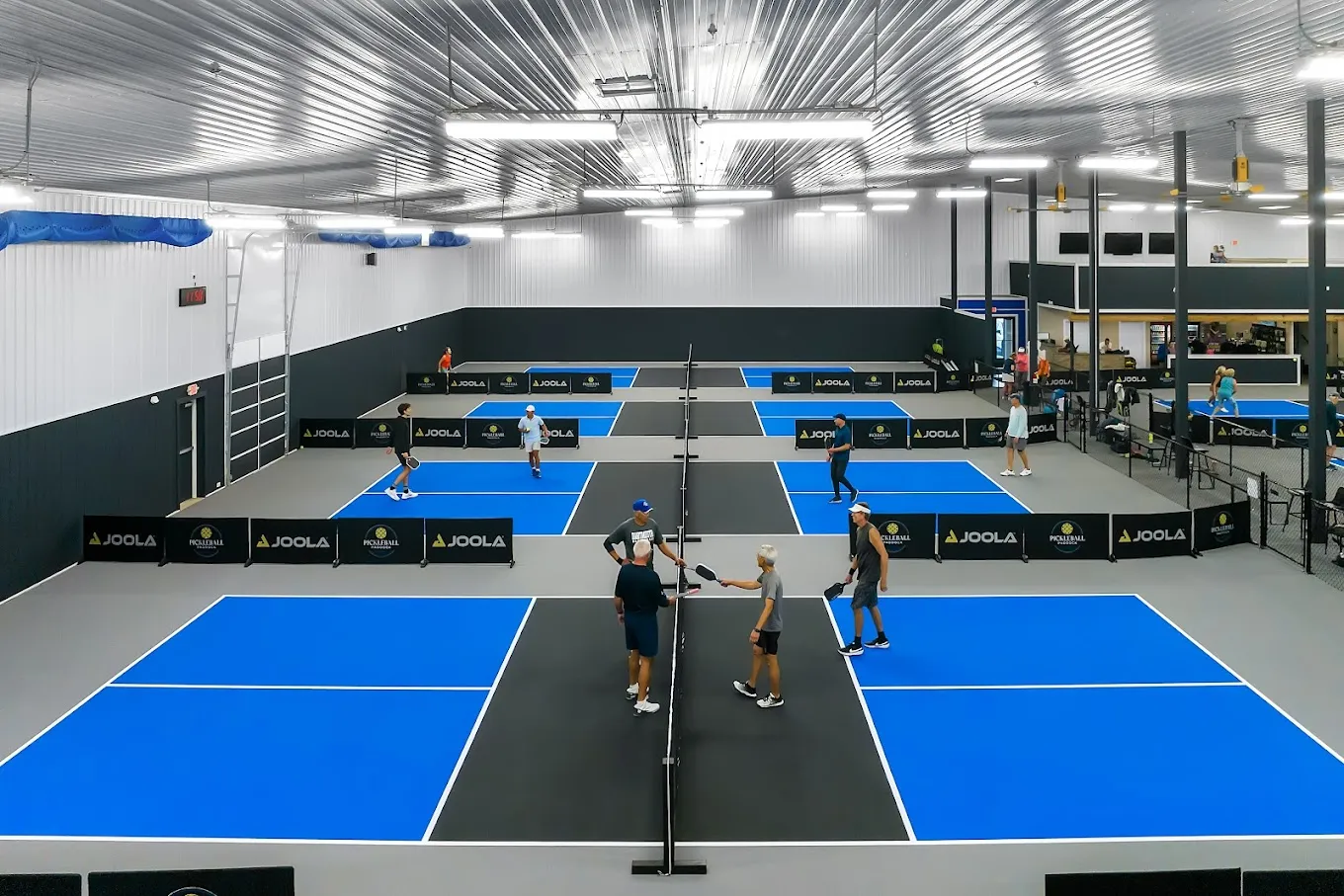
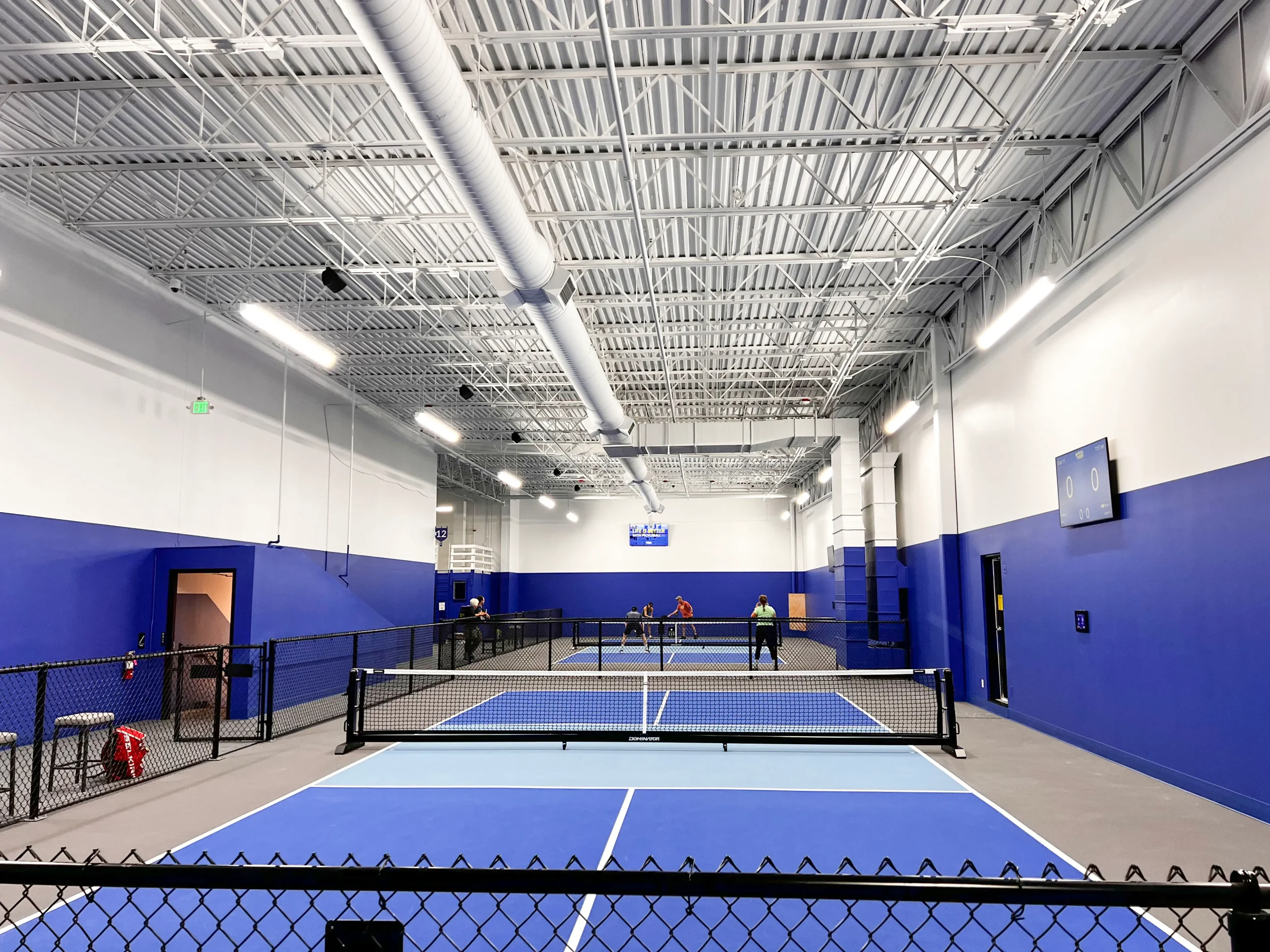
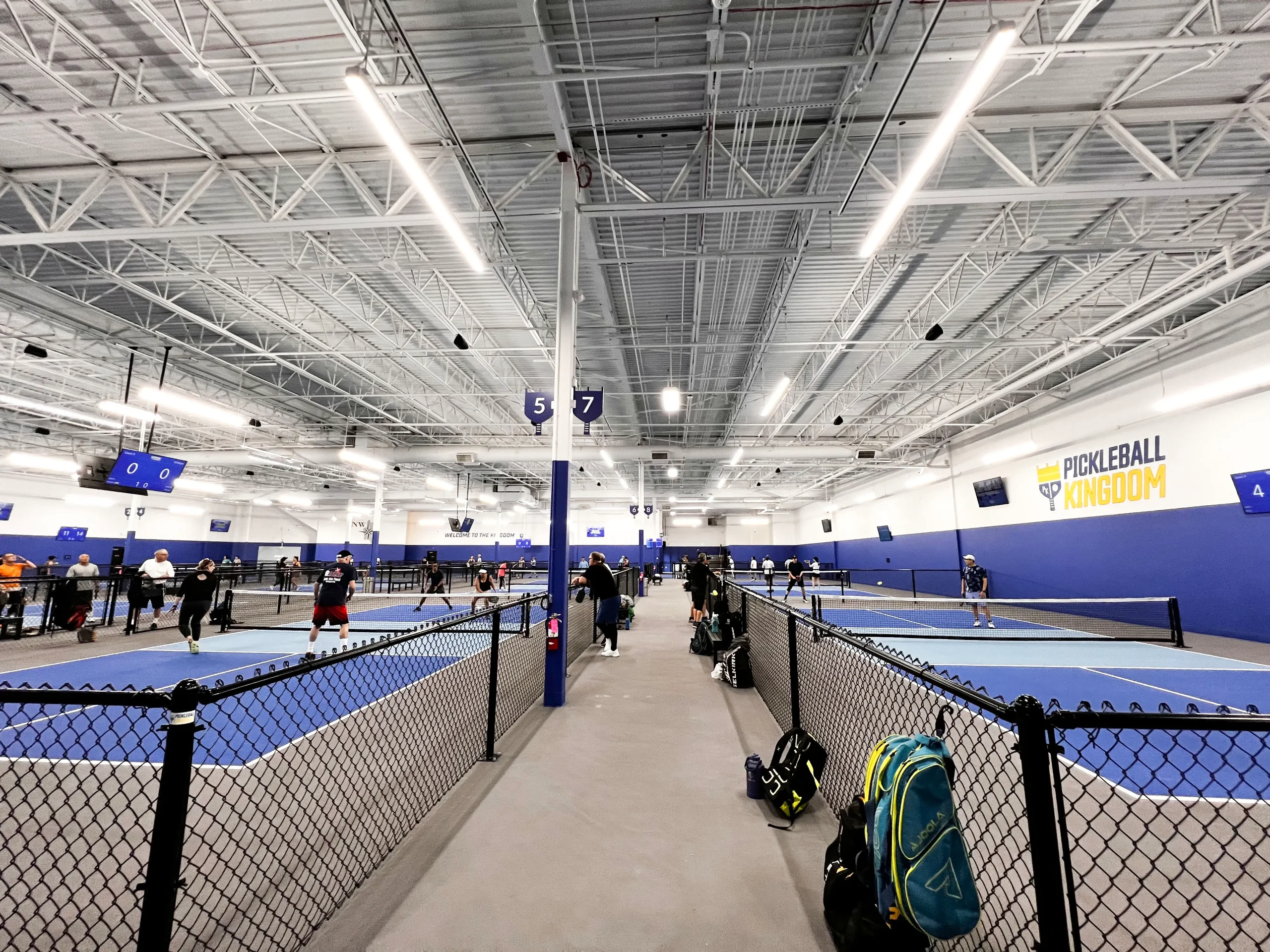
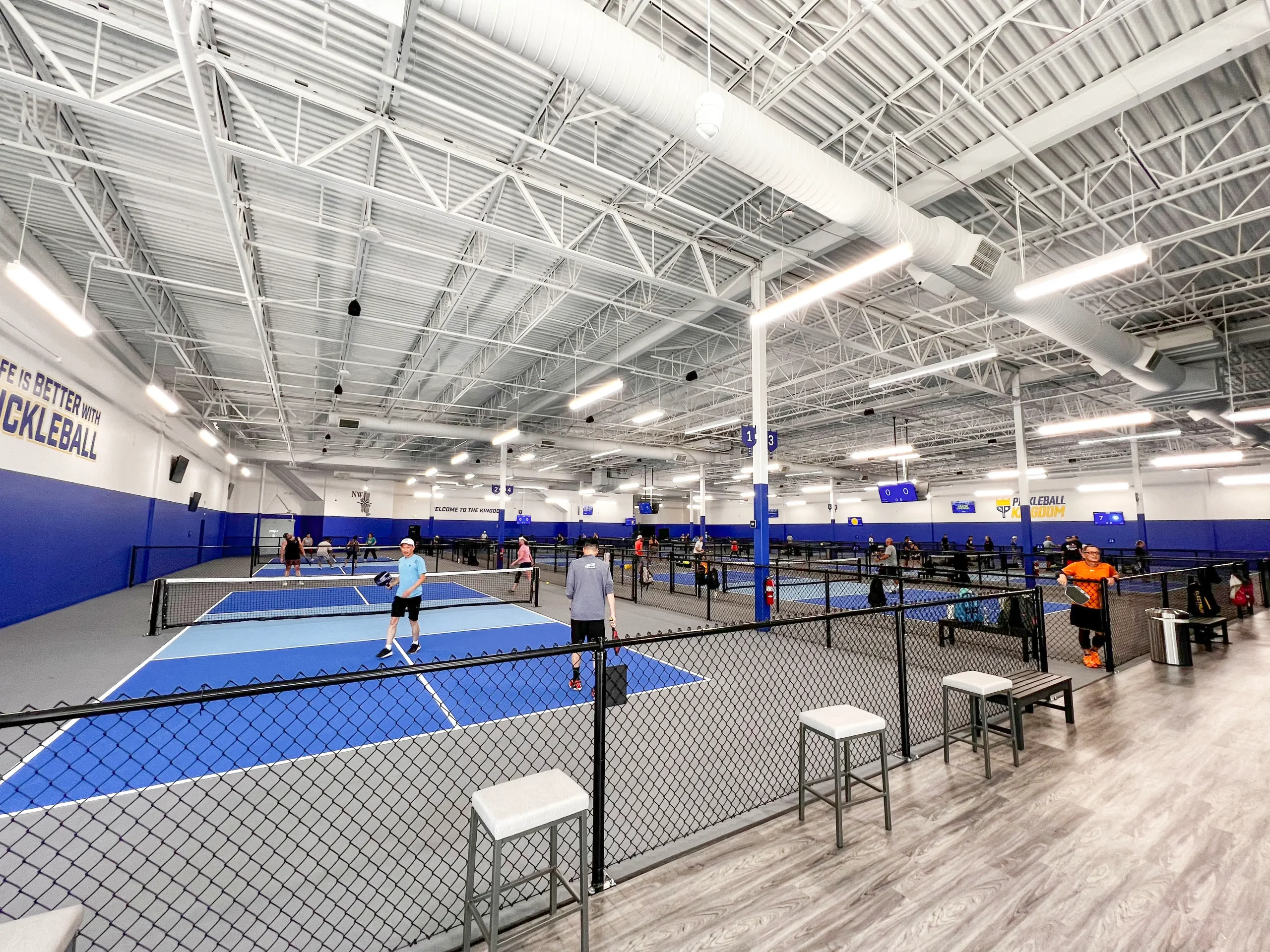
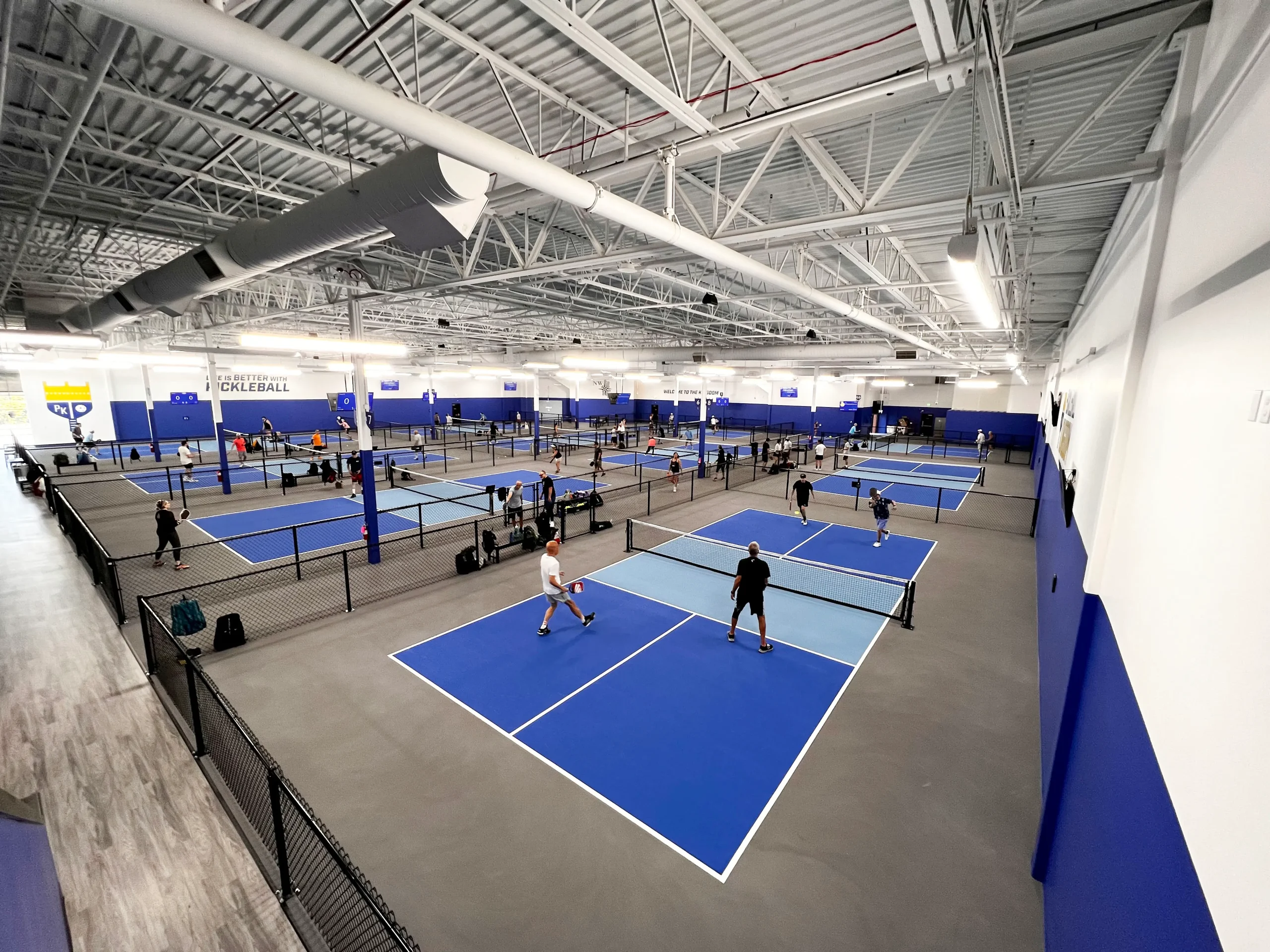
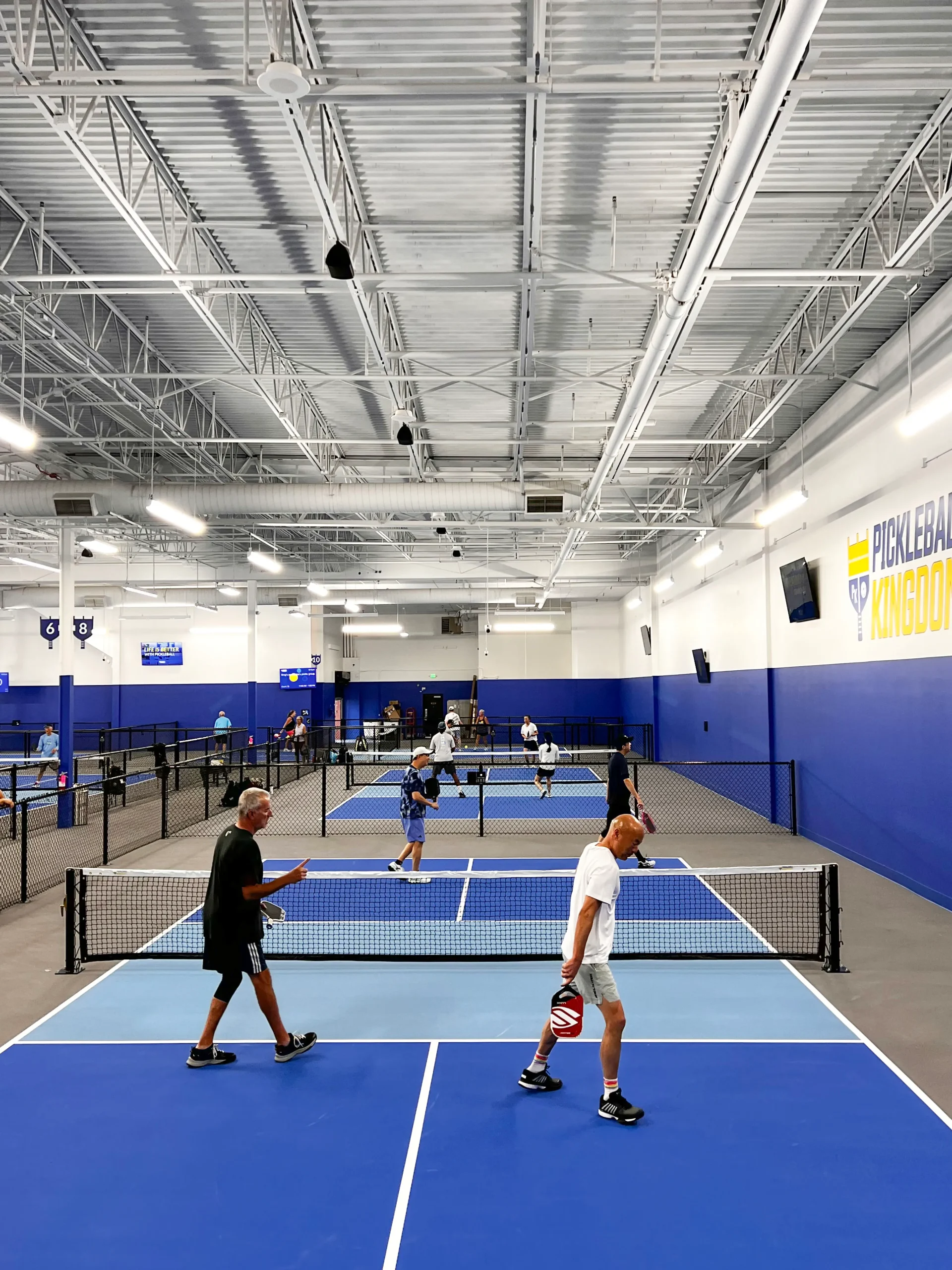
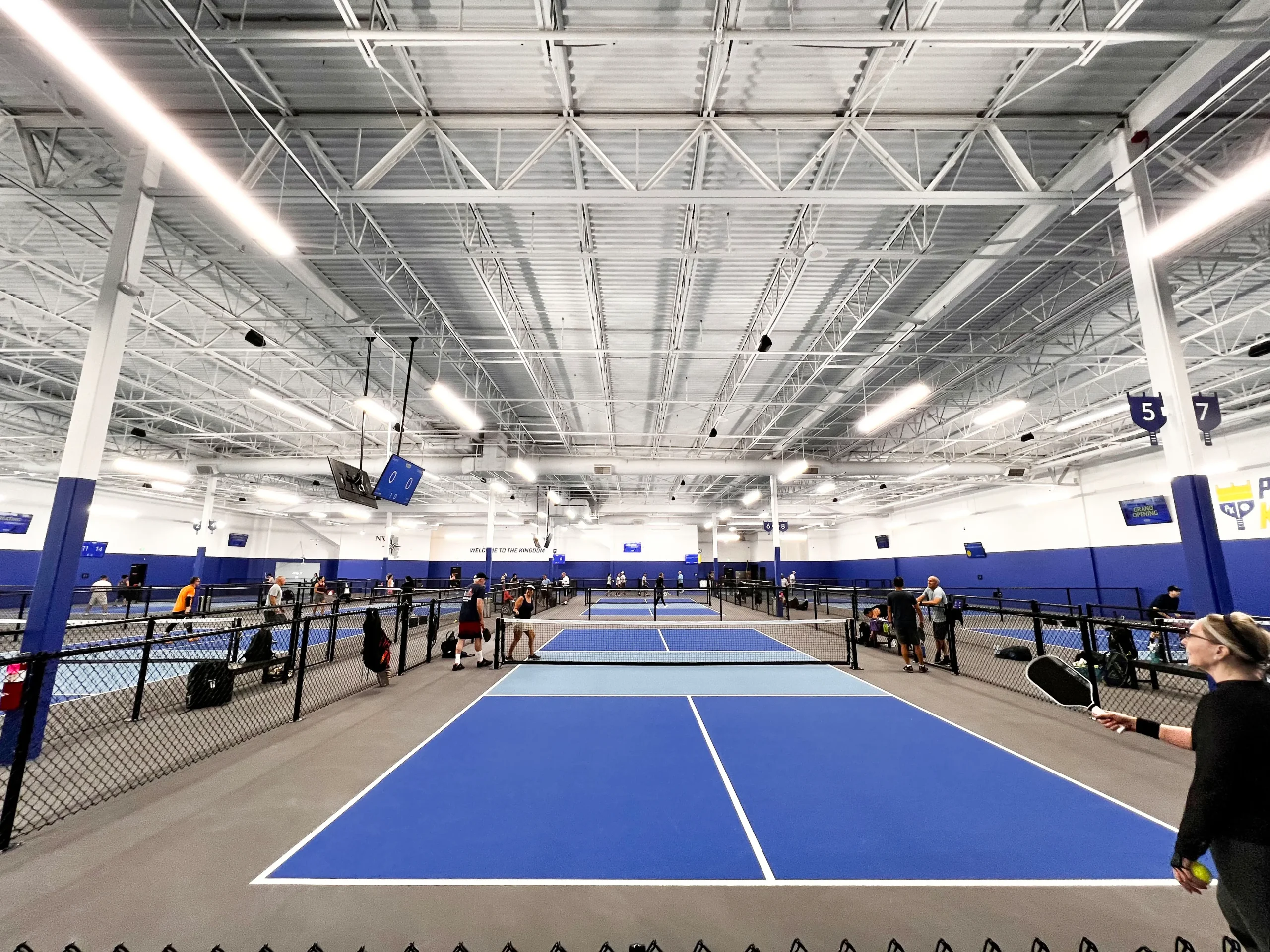
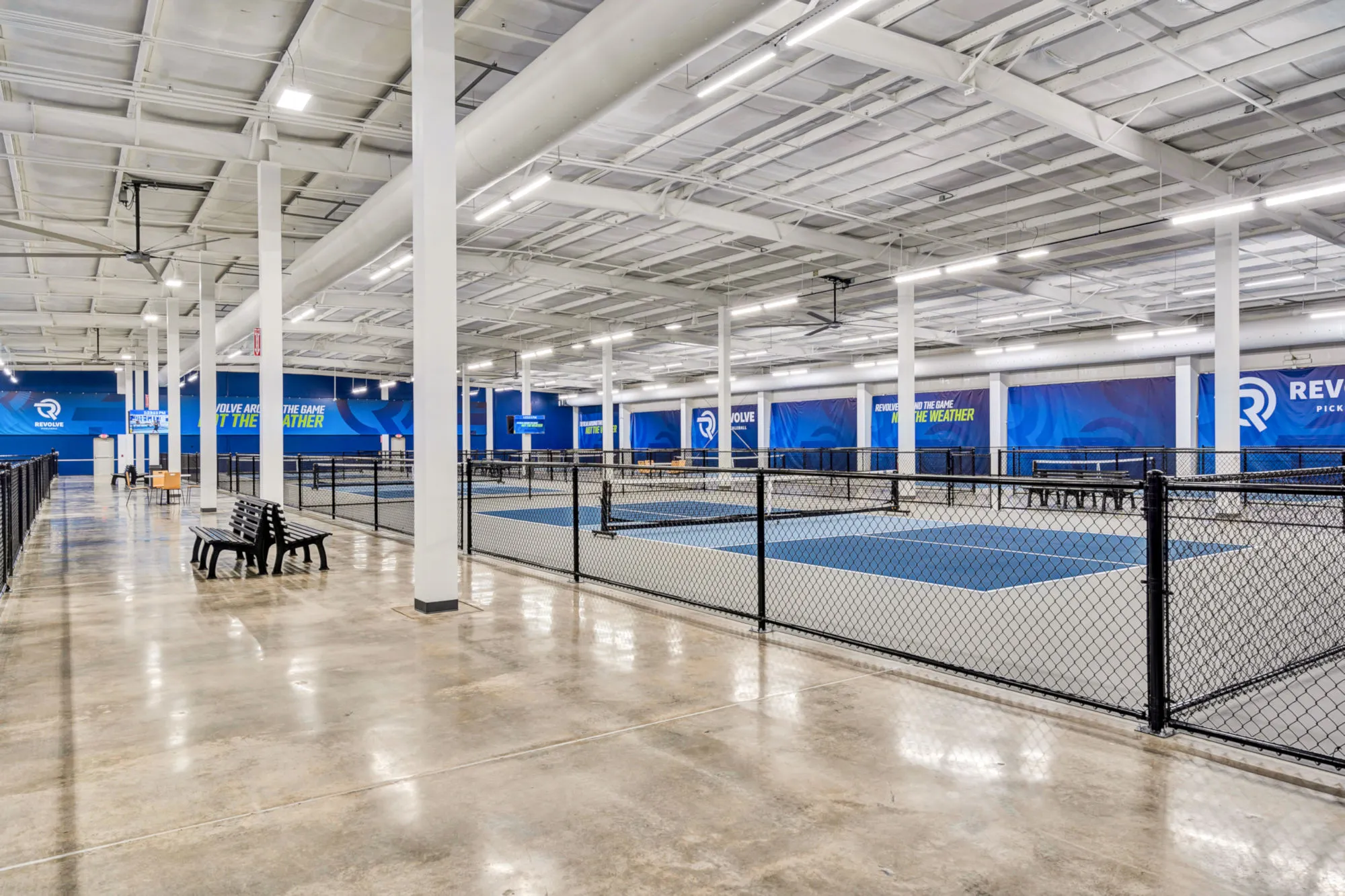
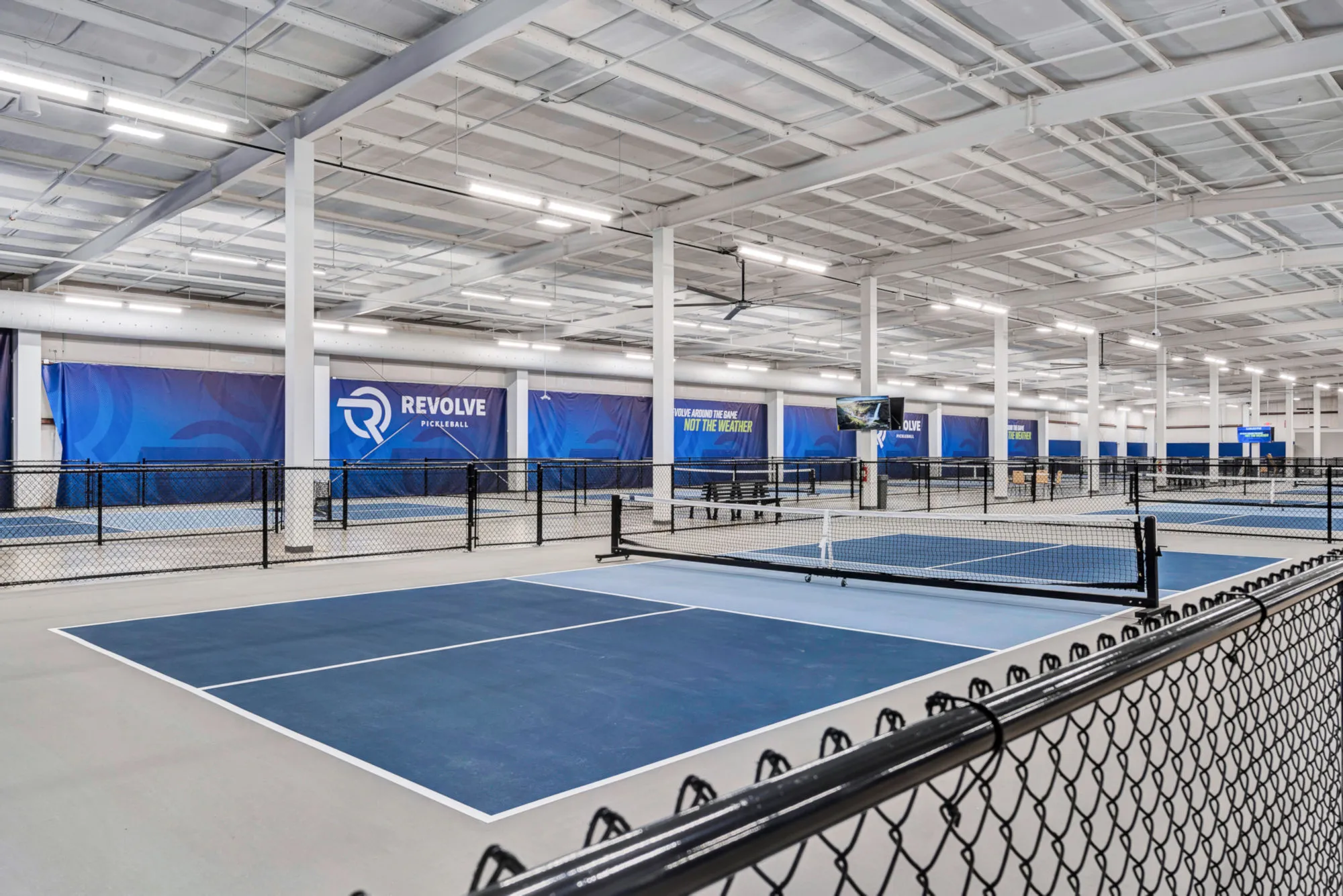
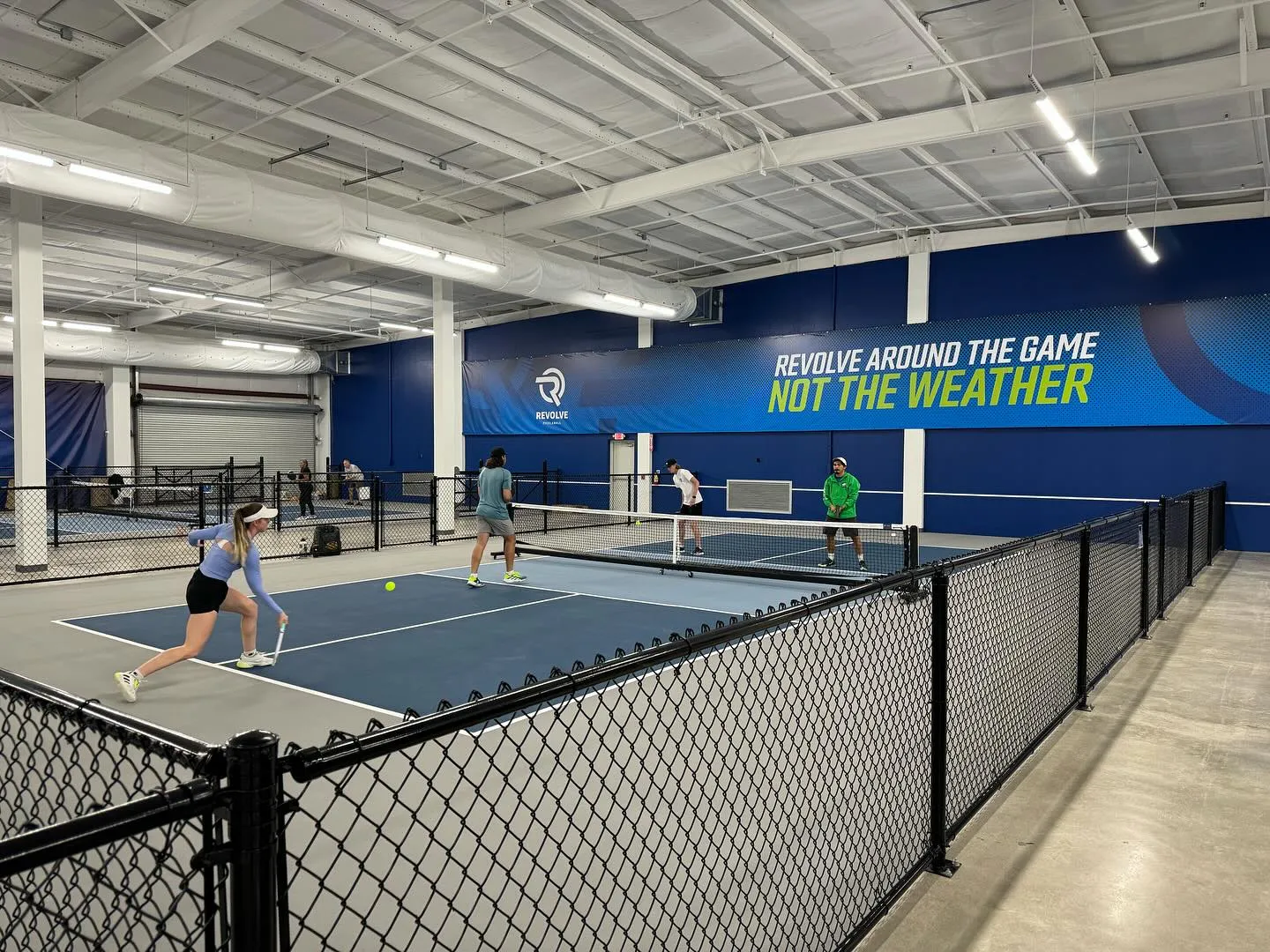
When you look at these facilities, notice what you don’t see. You don’t see dark, oppressive ceilings. You don’t see “hot spots” on the court. You don’t see players shielding their eyes.
These images showcase the 1st Source Direct-Indirect Advantage. By directing 40% of the light upward, we eliminate the “Cave Effect,” turning the entire volume of the building into a unified light source. This creates a “Stadium Atmosphere” where the ball pops against a luminous background and players can track overhead smashes without the blinding pixel brightness of standard LEDs.
Top-tier facilities choose the PCS Series Linear Direct-Indirect Pickleball Fixture because player retention starts with player experience. Our continuous linear rows create a seamless “sheet of light” that eliminates the strobe effect common with round fixtures. Whether it’s a championship point or a recreational rally, our LBAT diffused lenses ensure that your lighting is a competitive advantage, not an obstacle.
Q: What is the difference between Class I and Class II lighting standards for pickleball?
A: These classifications, defined by the ASBA and USA Pickleball, determine the quality of play your facility can support:
Q: Why does 1st Source Lighting challenge the UGR (Unified Glare Rating)?
A: UGR is a metric designed for office environments where people look horizontally at computers, not for sports where athletes look vertically at the ceiling.
Q: What is the “Cave Effect” and how do I stop it?
A: The “Cave Effect” occurs when a facility uses 100% direct lighting (downlight only), creating a bright floor but a pitch-black ceiling.
The Solution: You must light the ceiling. Our PCS Series uses a 60/40 Direct-Indirect split, sending 40% of the light upward to turn the ceiling into a luminous background, ensuring the ball remains visible at the apex of its arc.

Q: I’ve seen Round “UFO” High Bays for cheaper. Why shouldn’t I use those?
A: We consider Round UFOs the “Black Sheep” of pickleball lighting. While great for warehouses, they are detrimental to pickleball for three reasons:
Q: When should I choose the Indirect HEX Series over the Direct-Indirect BAY Series?
A: The Indirect HEX Series is a bespoke, premium solution designed for specific architectural environments:
Q: My facility has low ceilings (under 18 ft). What should I use?
A: Direct-Indirect lights need space to spread their uplight. For ceilings under 18 feet, we recommend our High Lumen Pickle Panel.
Q: I want a “Country Club” aesthetic. Do you have architectural options?
A: Yes. The Keystone LINTA Series is our architectural linear solution.
Q: How does lighting affect my facility’s ROI?
A: Lighting is the #1 driver of player retention.
Q: What is “LBAT” and why does it matter?
A: Lens Beam Augmentation Technology (LBAT) is our proprietary lens design. It uses a curved, highly diffused acrylic material that increases the surface area of light emission.
Q: Do I need a lighting layout design?
A: Absolutely. Never buy lights based on a guess. We offer Free Photometric Analysis. Send us your court dimensions and ceiling height, and our engineers will simulate the lighting performance, proving we can hit the Class I or II standards and uniformity ratios before you spend a dime.