
Food processing facility lighting sits at the intersection of three different regulatory frameworks, two distinct federal inspection regimes, and a global audit infrastructure that has been getting progressively more rigorous about facility infrastructure documentation. The lighting specification decisions a plant manager makes affect food safety audit outcomes, USDA FSIS inspection findings, FDA preventive controls compliance, and (for GFSI-certified facilities) third-party audit scores against schemes like SQF, BRCGS, and FSSC 22000. The fixture that gets specified on technical grounds also has to survive aggressive daily sanitation, withstand thermal cycling from washdown plus cold storage, and produce defensible documentation when an inspector or auditor asks why this specific fixture is appropriate for this specific zone. This guide is written for food safety and QA directors, plant managers, regulatory affairs teams, and the procurement specialists responsible for food processing facility infrastructure decisions. It covers the FDA, USDA FSIS, and NSF/ANSI 2 frameworks that govern food processing lighting in 2026, what each framework actually requires, the GFSI scheme alignment that matters for SQF Edition 10 and BRCGS Issue 9 audits, the fixture specification implications of these frameworks, and the documentation package buyers need to maintain audit readiness. For product-level information, our LED Cold Storage Lighting category is the primary reference, with the LED Vapor Tight Lights category covering the washdown-rated fixture families specifically.
Food processing facility lighting is regulated by multiple overlapping frameworks. FDA 21 CFR Part 117 (Preventive Controls for Human Food) requires adequate lighting and shatter protection in food zones. USDA FSIS Directive 5000.1 Revision 8 (January 2025) requires that meat, poultry, and egg processing facilities maintain lighting “of good quality and sufficient intensity” to allow proper sanitation and inspection, with inspection stations typically requiring 50 to 200 footcandles at 90+ CRI. NSF/ANSI 2 governs food equipment design and construction including overhead lighting fixtures in food contact and splash zones, requiring smooth crevice-free surfaces, non-toxic materials, and shatter-resistant lensing. GFSI schemes including SQF Edition 10 (released March 2026, audits begin January 2027), BRCGS Issue 9, and FSSC 22000 all require documented lighting risk assessments and shatter protection across food zones, not just over open product. The procurement implication is that food processing fixtures must combine appropriate IP rating (typically IP69 for high-pressure steam washdown), NSF/ANSI 2 food equipment certification, sealed-face crevice-free construction, polycarbonate or fragment-retention lensing, gasket materials compatible with the facility’s refrigeration and sanitation chemistry, and audit-ready documentation including cutsheets, certifications, and material declarations. Operators who treat food processing lighting as a commodity specification rather than an engineered compliance specification routinely fail audits, lose certification, and pay for retrofit cycles that should not have been necessary.
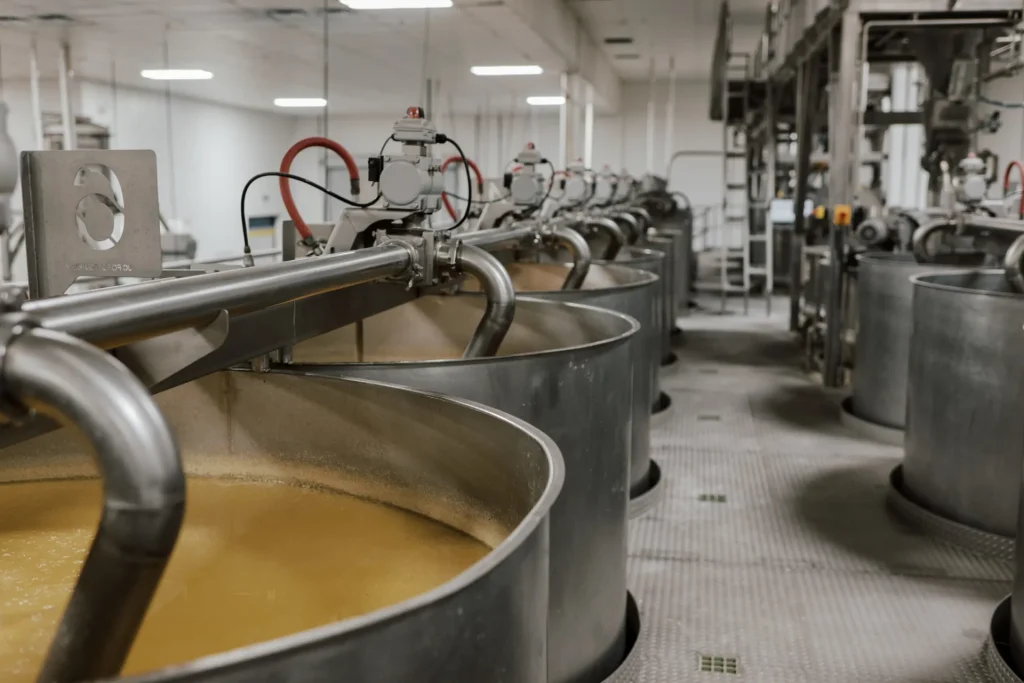
Food processing facility lighting is governed by three distinct regulatory frameworks, each with its own scope, jurisdiction, and specification implications. The frameworks overlap in some areas and operate independently in others, which means a single fixture specification has to satisfy multiple regulatory regimes simultaneously rather than a single unified standard. Operators who understand the framework boundaries can specify fixtures more efficiently and document compliance more defensibly than operators who treat food processing regulation as a single monolithic requirement.
The FDA Food Safety Modernization Act preventive controls rule, codified at 21 CFR Part 117, applies to food facilities required to register with the FDA under section 415 of the Federal Food, Drug, and Cosmetic Act. The rule includes current Good Manufacturing Practice (CGMP) requirements at subpart B covering personnel, plant and grounds, sanitary operations, sanitary facilities and controls, equipment and utensils, and other production controls. The lighting-specific provisions appear at 21 CFR 117.20 covering plant construction and design, and at 21 CFR 117.40 covering equipment and utensils, which together establish that food contact surfaces and the surfaces of equipment in proximity to food must be smooth, non-porous, and constructed so as not to contribute contamination from any source.
The most operationally consequential 21 CFR 117 requirement for lighting is the shatter protection mandate. Light bulbs, fixtures, skylights, or other glass items suspended over exposed food in any step of preparation must be of the safety type or otherwise protected to prevent food contamination in case of breakage. The provision is interpreted broadly in FDA inspection practice, with the prevailing inspector expectation being that shatter protection applies to fixtures throughout food zones rather than only to fixtures directly over exposed product. This makes shatter-resistant polycarbonate lensing or fragment-retention safety film a baseline specification for any food processing facility, not a special-case feature.
The illuminance requirement in 21 CFR 117 is qualitative rather than prescriptive. The rule requires “adequate lighting” in hand-washing areas, dressing and locker rooms, toilets, areas where food is examined, processed, or stored, and areas where equipment or utensils are cleaned. The lack of specific footcandle minimums in 21 CFR 117 is intentional because FDA expects facilities to determine illuminance levels appropriate to the specific tasks performed in each zone, with inspectors evaluating adequacy in context. In practice, facilities typically specify illuminance levels matching industry guidance from the Illuminating Engineering Society and state inspection program preferences, which produce defensible documentation under FDA inspection.
The USDA Food Safety and Inspection Service operates the federal inspection program for meat, poultry, Siluriformes (catfish), and egg products under the authority of the Federal Meat Inspection Act, the Poultry Products Inspection Act, and the Egg Products Inspection Act. The current inspection framework is documented in FSIS Directive 5000.1 Revision 8, issued January 2025, which replaced Revision 7 from October 2022.
FSIS Directive 5000.1 establishes the framework Inspection Program Personnel (IPP) use to verify establishments’ food safety systems and sanitation operations. Lighting requirements appear within the broader sanitation framework rather than as a standalone specification, with the operative language requiring that establishments maintain lighting “of good quality and sufficient intensity to ensure that sanitary conditions are maintained and that the product is not adulterated.” The directive does not specify universal footcandle minimums for all areas, instead establishing the principle that adequacy must be demonstrated in context, similar to FDA’s qualitative approach.
In practice, FSIS-inspected facilities typically maintain higher illuminance levels in inspection stations and processing areas than the qualitative directive requires, because USDA inspectors evaluating carcass quality, identifying pathology, and assessing contamination need consistent shadow-free light at color rendering levels that allow accurate visual judgment. Industry practice for USDA FSIS inspection stations is typically 50 to 200 footcandles maintained at 90+ CRI, with the higher end of the range applying to the most demanding inspection tasks. Processing areas adjacent to inspection stations typically run 50 to 100 footcandles, and storage and chiller areas typically run 20 to 50 footcandles. For background on the relationship between footcandles and visual performance in commercial environments, our footcandle guide covers the underlying metrics, and our CRI explainer covers why color rendering matters specifically for inspection applications.
The fixture specification implication of FSIS inspection is significant. Inspectors examining meat for bruising, disease, contamination, or quality defects need accurate color rendering, which means CRI 80 minimum is the baseline for general FSIS-regulated processing facilities and CRI 90+ is the appropriate specification for inspection stations specifically. Color temperature also matters; cold storage and processing facilities typically specify 4000K to 5000K for crisp neutral white light that supports accurate color discrimination and reduces visual fatigue across long shifts.
NSF/ANSI 2 is the American National Standard for food equipment, covering the materials, design, construction, performance, sanitation, and other requirements for food handling equipment. The standard applies to equipment used in food service establishments, food processing facilities, and food storage facilities, and explicitly includes overhead lighting fixtures that operate in food contact zones, splash zones, and non-food zones in proximity to food handling operations. NSF/ANSI 2 was updated in 2025 with publication in early 2026, and the current edition is the operative reference for new fixture specifications.
The standard establishes three principal requirements for food equipment including lighting fixtures. First, materials of construction must be safe, non-toxic, and capable of withstanding the temperatures and sanitation chemicals expected in normal use. For lighting fixtures, this typically means stainless steel, food-grade aluminum with appropriate coatings, fiberglass-reinforced polyester, or other certified materials, with polycarbonate or other shatter-resistant non-toxic materials for lensing. Second, equipment design must minimize the accumulation of food debris, dust, and other contaminants. For lighting fixtures, this means smooth crevice-free exterior surfaces, no exposed screws or fasteners on food-facing surfaces, continuous gasketing without breaks or harborage points, and sloped or rounded profiles that shed water and prevent debris accumulation. Third, equipment must withstand normal cleaning and sanitation procedures without degradation, including resistance to the specific cleaning chemicals used in the application.
The combination of materials, design, and durability requirements means that NSF/ANSI 2 certified lighting fixtures are structurally different from general commercial fixtures. They cost more (typically 25 to 60 percent premium over standard commercial fixtures) because the construction is more demanding, and they require third-party certification testing to verify the requirements are actually met. NSF certification is performed by NSF International and other accredited certification bodies, and the certification mark on a fixture indicates that the specific fixture model has been independently tested against NSF/ANSI 2 requirements. The certification is fixture-specific rather than manufacturer-wide, which means operators specifying NSF-certified fixtures need to verify certification at the model level rather than relying on general manufacturer claims.
A specialized variant, NSF P442, applies to controlled environment light fixtures specifically, with additional requirements for pressure decay performance in cleanroom and other controlled environments. NSF P442 is the appropriate certification reference for pharmaceutical cleanrooms and food processing facilities operating positive or negative pressure environments. The specification and applications of NSF P442 are covered in detail in our companion guide on pharmaceutical cold storage lighting compliance and ultra-low temperature considerations.
Most US food processing facilities sell into customer supply chains that require certification under one or more Global Food Safety Initiative (GFSI) benchmarked schemes. The major schemes affecting US food processing facility lighting decisions in 2026 are SQF (Safe Quality Food), BRCGS (formerly BRC Global Standards), and FSSC 22000. Each scheme has its own audit framework but they share common expectations around facility infrastructure, sanitation, and contamination prevention that affect lighting specification.
SQF Edition 10 was published in March 2026 by the Safe Quality Food Institute, replacing SQF Edition 9. Edition 10 audits are expected to begin no earlier than January 2, 2027, pending completion of the GFSI benchmarking process. The transition period gives currently SQF-certified facilities approximately nine months to update their food safety systems, complete gap assessments, and prepare for Edition 10 audit requirements. The new edition emphasizes food safety culture, change management, environmental monitoring, and consolidated documentation, with a revised scoring model that includes weighted Core Clauses. Major changes include a required food safety culture assessment plan, a more rigorous change management clause that requires structured documentation of facility infrastructure changes, and a more digital-first Code experience that affects how facilities maintain and present audit documentation.
The lighting specification implications of SQF Edition 10 are primarily indirect. The change management clause means that lighting retrofits and fixture replacements need to be formally risk-assessed and documented before installation, with records demonstrating that the change does not introduce new contamination vectors. The food safety culture and environmental monitoring requirements increase the documentation expected for facility infrastructure decisions including lighting. The implication for new fixture specifications is that audit-ready documentation packages become more important than they were under Edition 9, with cutsheets, NSF certifications, IP ratings, material declarations, and sanitation chemical compatibility statements all expected to be available for auditor review on demand.
The British Retail Consortium Global Standards (now BRCGS) Food Safety Standard Issue 9 has been the operative version since February 2023. BRCGS Issue 9 includes specific requirements for lighting risk assessment and shatter protection across food handling areas. The standard requires that facilities formally assess where light bulbs and fixtures pose a contamination risk, and strongly recommends fragment-retention (shatterproof) lamps globally across the facility rather than only in zones directly above exposed food. This is a more conservative interpretation than the FDA 21 CFR 117 baseline, which technically only requires shatter protection for fixtures above exposed food.
For US food processing facilities certified to BRCGS Issue 9, the practical specification implication is that polycarbonate or fragment-retention lensing should be the default specification across the facility rather than zone-by-zone. This simplifies procurement and improves audit posture compared to mixed lensing specifications that might require defending zone boundaries during audit.
FSSC 22000 (Food Safety System Certification 22000) combines ISO 22000 with sector-specific prerequisite programs and additional FSSC requirements. The current operative version as of 2026 is Version 6.0, which was published in 2023 and is fully implemented across certified facilities. FSSC 22000 lighting requirements derive from the underlying ISO 22000 food safety management framework and the relevant ISO/TS 22002 prerequisite program for the specific food sector. The lighting expectations are broadly consistent with FDA 21 CFR 117 and BRCGS Issue 9: adequate illuminance for tasks, shatter protection where contamination risk exists, and documentation of the facility’s approach to lighting management within the broader food safety management system.
The common thread across all three GFSI schemes is that audit-ready documentation has become more important than it was a decade ago. Auditors expect to see fixture cutsheets, NSF certifications where applicable, IP ratings appropriate to the zone sanitation regime, gasket and housing material declarations, and evidence that the facility has formally assessed lighting risk as part of its broader food safety management system. Fixtures that ship without complete documentation packages create audit work that fixtures with complete packages do not, which is a meaningful operational difference even if the fixtures perform identically in service.
The combination of FDA 21 CFR 117, USDA FSIS Directive 5000.1, NSF/ANSI 2, and GFSI scheme alignment produces a specification framework with several non-negotiable elements for food processing facility lighting. Operators who use this framework as their starting specification produce installations that pass FDA inspection, USDA FSIS verification, and GFSI third-party audit without ad-hoc accommodation.
Food processing facilities running daily high-pressure steam washdown protocols require IP69 stationary equipment rating to ensure fixture seals withstand the specific pressure (1,160 to 1,450 psi) and temperature (176°F) regime of industrial sanitation. The complete IP rating framework and the IP66 versus IP69 specification decisions are covered in detail in our companion guide on IP66, IP67, IP69, and IP69K ratings in cold storage and washdown environments, but the food processing specification baseline is IP69 for washdown zones, IP66 for ambient zones and inspection stations, and (for facilities with both regimes) zone-by-zone specification rather than facility-wide.
NSF/ANSI 2 certification is the appropriate baseline for any fixture installed in food zones or splash zones. The certification verifies that the fixture’s materials, design, and construction meet the food equipment requirements, and the certification mark provides defensible documentation during audit. Operators should specify NSF/ANSI 2 certification by model number rather than by manufacturer, and should request the certification documentation alongside cutsheets during procurement to maintain a complete documentation package.
NSF/ANSI 2 design requirements translate operationally into sealed-face fixture construction without exposed screws, fasteners, or external heat-sink fins that could harbor debris or moisture. Sealed-face troffer designs and smooth-housing vapor tights are the appropriate fixture form factors for food processing applications. Our LED Sealed Face Troffer family is engineered specifically for these applications, with continuous polycarbonate lensing across the fixture face that eliminates the lens-housing seam that traditional troffers expose, and no external heat sinks that would create cleanability concerns.
Shatter protection is a baseline requirement across FDA 21 CFR 117, NSF/ANSI 2, and all major GFSI schemes. Polycarbonate lensing is the typical default specification because it provides excellent impact resistance, no shatter risk, and good optical performance. Tempered glass with fragment-retention safety film is an alternative for applications requiring superior optical clarity, but the cost and complexity advantages of polycarbonate make it the more common specification for food processing facility lighting. Glass lensing without fragment retention is not appropriate for food processing applications regardless of any other specification.
CRI 80 minimum is the baseline specification for general food processing facility lighting. CRI 90+ is the appropriate specification for USDA FSIS inspection stations, meat and poultry grading areas, and any zone where accurate color discrimination affects quality or safety judgment. Color temperature of 4000K to 5000K is the typical specification for food processing facilities, providing the crisp neutral white light that supports color accuracy and worker alertness across long shifts. Lower color temperatures (3000K to 3500K) are sometimes specified for retail-facing dairy or floral display areas where warmth and visual appeal matter, but these are exceptions to the processing facility baseline.
Food processing facilities frequently combine washdown sanitation requirements with cold storage operating temperatures. Meat processing facilities typically operate at 35 to 50°F during production with frozen storage zones at sub-zero temperatures. Dairy processing facilities typically operate at refrigerated temperatures throughout. Brewery cold storage operates at refrigerated temperatures. The combination of cold operating temperature and washdown sanitation means that fixtures must combine cold-rated driver specifications (negative 40°F cold start capability, solid polymer or ceramic capacitors) with IP69 washdown rating and NSF/ANSI 2 certification. This combined specification is more demanding than either cold storage alone or washdown alone, and it is the area where commodity fixture procurement most frequently fails.
Gasket material specification matters significantly in food processing because the sanitation chemistry can be aggressive and the refrigeration chemistry may include ammonia. EPDM gaskets are typically appropriate for ammonia refrigeration applications and for facilities using aggressive chemical sanitizers that would degrade silicone over time. Silicone gaskets are typically appropriate for halocarbon refrigeration applications and for facilities using milder sanitation chemistry. The specification should be explicit in bid documentation because mismatched gaskets are a primary failure mode that the IP rating alone does not prevent.
Stainless steel (304 or 316 grade) or fiberglass-reinforced polyester (FRP) are the appropriate housing materials for food processing facility lighting. Coated aluminum is acceptable when the coating system is high-quality (polyester or polyurethane powder coat with proper surface preparation), but coated aluminum requires verification of the coating specification rather than assumption that all coated aluminum is equivalent. 316 stainless is appropriate for seafood processing facilities and any application with high chloride exposure; 304 stainless is appropriate for general food processing including meat, poultry, and dairy.
Food processing facility lighting specifications produce defensible audit outcomes when the documentation package is complete and accessible. The standard documentation package for each fixture model installed in the facility should include cutsheets with detailed specifications, IP rating certification documentation, NSF/ANSI 2 certification documentation where applicable, materials declarations covering housing and gasket materials, sanitation chemical compatibility statements, photometric IES files for the installed configuration, and (for federally-funded projects) BAA/BABA compliance documentation.
Our cutsheet library provides cutsheet documentation for all our fixture families, including the cold storage and washdown-rated products specifically applicable to food processing applications. Complete documentation packages including certifications and materials declarations are available on request and ship alongside fixture orders for any project involving regulatory compliance documentation. The complete IES files for photometric verification are available through our IES file library, which supports facility photometric documentation during initial commissioning and ongoing operational verification.
Three specification errors recur in food processing facility lighting procurement, each producing predictable operational consequences. Understanding these patterns helps procurement teams avoid them rather than learn from them.
The first common error is specifying ambient commercial fixtures with food-zone NSF certification. NSF/ANSI 2 certification covers food equipment construction and cleanability but does not address cold-rated driver performance or washdown IP rating. An NSF-certified fixture without IP69 rating and cold-rated driver specification will pass food safety audit on documentation but fail in service in a refrigerated washdown environment. The correct specification combines NSF/ANSI 2 with IP69 and cold-rated driver as independent requirements.
The second common error is specifying IP69K instead of IP69 for stationary food processing equipment. The IP69K rating originated as a German DIN automotive standard for vehicle equipment that experiences episodic post-service washdown rather than continuous operational washdown. IP69K-rated fixtures may not meet the sustained seal integrity expectations of daily food processing sanitation that IP69 stationary equipment standard requires. The distinction is covered in detail in our IP rating guide, but the specification implication for food processing facilities is to require IP69 stationary equipment rating rather than IP69K automotive-origin rating.
The third common error is specifying without zone-by-zone documentation. Food processing facilities almost always have multiple zones with different requirements (processing lines, sanitation corridors, inspection stations, cold storage, ambient finished goods, dock and staging). A single facility-wide fixture specification typically over-specifies for some zones and under-specifies for others. Zone-by-zone specification with the appropriate fixture, IP rating, NSF certification, CRI, and color temperature for each zone produces installations that match operational requirements and audit expectations across the facility.
CRI 90 or higher. USDA inspectors examining carcasses for bruising, disease, contamination, and quality defects need accurate color rendering to make defensible visual judgments. Lower CRI lighting (in the 70 to 80 range typical of older commercial fixtures) makes accurate color discrimination difficult and creates inspection consistency problems. The CRI 90+ specification is straightforward to meet with modern LED fixtures and adds minimal cost to the overall fixture specification. Our CRI explainer covers the underlying metric in more detail.
In food zones and splash zones, yes. In non-food zones at distance from food handling operations (offices, locker rooms, ambient finished goods staging, dock areas distant from active food handling), NSF/ANSI 2 certification is not strictly required by FDA or USDA, though it is often specified for procurement consistency. The right approach is zone-by-zone specification: NSF/ANSI 2 plus IP69 for processing lines and washdown areas, NSF/ANSI 2 plus IP66 for inspection stations and food-adjacent spaces, and standard commercial fixtures for office and back-of-house areas where contamination risk is low.
SQF Edition 10 increases the documentation expected for facility infrastructure decisions including lighting, primarily through the new change management clause and the enhanced food safety culture and environmental monitoring requirements. The fixture specifications themselves do not change significantly from Edition 9, but the documentation, risk assessment, and change management processes around lighting decisions become more formalized. Facilities planning lighting retrofits or new construction in 2026 should ensure their fixture specifications include complete documentation packages (cutsheets, NSF certifications, IP ratings, material declarations) and that the project includes formal change management documentation appropriate for Edition 10 audit review beginning in 2027.
Only with fragment-retention safety film and only when the lens is positioned away from direct overhead exposure to food. The default specification for food processing facilities is polycarbonate lensing, which provides shatter resistance without requiring additional safety film. Tempered glass with fragment-retention film is an alternative for applications requiring superior optical clarity, but the cost and complexity advantages of polycarbonate make it the more common specification. Unprotected glass lensing is not appropriate for food processing applications regardless of any other specification, and FDA inspectors evaluating shatter protection compliance under 21 CFR 117 routinely identify unprotected glass as a finding.
Food zone means surfaces and equipment in direct contact with food, or surfaces positioned where food contact is reasonably likely during normal operations. Lighting fixtures in food zones require NSF/ANSI 2 certification, polycarbonate or fragment-retention lensing, and appropriate IP rating for the sanitation regime. Splash zone means surfaces and equipment in proximity to food handling where splash, spray, or aerosol contact is reasonably foreseeable. Fixtures in splash zones require similar specifications to food zones, with particular attention to sealed-face construction and IP rating. Non-food zone means surfaces and equipment in the facility but not in food contact or splash proximity, including offices, locker rooms, dock areas distant from food handling, and similar spaces. Non-food zones have less restrictive lighting requirements, typically standard commercial fixtures with appropriate code compliance but without specialized food safety certifications.
Operationally, no. Different zones have different requirements and a single facility-wide specification produces over-specification in some zones (wasted capital) and under-specification in others (compliance and reliability problems). The correct approach is zone-by-zone specification with documented justification for each zone’s chosen fixture, which produces both efficient capital deployment and defensible audit documentation. Most food processing facilities end up with 3 to 6 distinct fixture specifications across the facility, with the IP rating, NSF certification status, and CRI varying by zone.
NSF/ANSI 2 certification is fixture-specific and does not require recurring recertification once the fixture model is certified, unless the manufacturer changes the materials or construction. IP rating certification similarly does not require recurring recertification unless the fixture design changes. Operational documentation including the photometric verification of installed performance should be reviewed during periodic facility audits, with photometric re-measurement appropriate when fixtures approach their L70 service life or when room layout changes affect light distribution. Most facilities perform photometric verification at initial installation and again at 5 to 10 year intervals or when audit findings require it.
Only if the project is funded through federal pathways requiring BAA/BABA compliance. USDA FSIS regulation of the facility itself does not require BAA/BABA compliance for lighting fixtures. However, facilities pursuing USDA REAP funding, IIJA infrastructure grants, or other federal pass-through funding for the lighting project will require BAA/BABA compliance documentation for the manufactured products specified. Our fixtures are BAA and BABA compliant with final assembly in Auburn, California and 55 percent domestic content meeting the BABA threshold. Documentation is available on request, and the complete BAA and BABA framework is documented on our BAA/BABA compliance page.
Emergency egress lighting in food processing facilities must meet the same general food safety standards as primary lighting where the emergency fixtures are installed in food zones or splash zones. This means NSF/ANSI 2 certification, shatter-resistant lensing, and appropriate IP rating for the sanitation regime, plus cold-rated battery and component specifications for facilities operating at cold storage temperatures. Standard commercial emergency fixtures with non-cold-rated batteries will not maintain their listed runtime in cold environments, which creates both code compliance and life-safety concerns. The specification should be explicit about cold-rated emergency components for any food processing facility operating at refrigerated or frozen temperatures.
Food processing facility lighting decisions need to satisfy FDA 21 CFR 117, USDA FSIS Directive 5000.1, NSF/ANSI 2, and the relevant GFSI scheme (SQF, BRCGS, or FSSC 22000) simultaneously while also performing reliably in the specific operating environment of the facility’s processing lines, sanitation corridors, inspection stations, and cold storage zones. Getting the specification right at the start of the project is meaningfully cheaper than correcting it during operation, and the documentation that supports defensible audit outcomes also tends to be the documentation that supports defensible operational decisions over the fixture’s full service life.
We have been engineering food processing and cold storage lighting fixtures since 1993, and our product families across vapor tight, sealed face troffer, and cold linear high bay configurations are designed for the specific combined requirements of food processing facilities operating cold storage temperatures, washdown sanitation regimes, USDA FSIS inspection standards, FDA preventive controls compliance, and GFSI scheme certification. Send us your facility dimensions, zone descriptions, processing operations, refrigeration system documentation, sanitation regime, and the specific compliance frameworks your facility operates under (FDA only, USDA FSIS, GFSI scheme certifications). We will prepare a free photometric layout showing the recommended zone-by-zone fixture specification with appropriate IP rating, NSF certification, CRI, color temperature, and gasket material documentation for each zone, plus complete documentation packages appropriate for FDA inspection, USDA FSIS verification, and GFSI third-party audit. For projects involving novel processing operations, multiple federal compliance frameworks, or specialized validation requirements, contact our engineering team directly. The compliance framework is the headline, but the engineering work that combines compliance with operational reliability is what makes food processing facility lighting deliver its promised performance across audit cycles and service life.