
Cold storage lighting retrofits are different from ambient warehouse retrofits in four meaningful ways: the financial returns are compounded by the refrigeration multiplier, the fixture survivability requirements are more demanding, the procurement process often involves food safety and pharma compliance documentation, and the federal funding and tax incentive landscape includes time-sensitive deadlines that change the math year to year. This guide is written for facility engineers, plant managers, cold chain logistics directors, food safety and QA managers, and the corporate procurement teams that have to put cold storage retrofit projects through capital review. It covers the actual cost ranges for cold storage LED retrofits across facility types, the five financial drivers that determine whether a project pays back in fifteen months or four years, the federal and utility funding pathways available in 2026, the BAA and BABA compliance documentation required for federally-funded projects, the practical procurement and installation realities of working in a refrigerated environment, and the June 30, 2026 Section 179D construction-start deadline that operators planning 2026 retrofits need to factor into project timing. For product-level information, our LED Cold Storage Lighting category is the primary reference.
Cold storage LED retrofits typically cost $60,000 to $600,000 depending on facility size, fixture count, sanitation requirements, and controls integration. Payback periods of twelve to twenty-four months are achievable when all five financial drivers are modeled: direct lighting energy reduction, refrigeration multiplier savings, reclaimed compressor capacity, eliminated freezer-tax maintenance, and integrated wireless controls. Federal funding pathways including USDA REAP grants and loan guarantees, IRA-funded utility rebate programs, and the Section 179D commercial building energy-efficient deduction (which sunsets for construction beginning after June 30, 2026) can collectively reduce net project cost by twenty to fifty percent for qualifying projects. Federally-funded projects require BAA and BABA compliance documentation for the manufactured products specified. Energy-only payback calculations that ignore the multiplier and the four secondary drivers systematically understate cold storage retrofit returns by thirty to seventy percent, which causes finance teams to defer or cancel projects that would have produced substantially better returns than the alternative uses of the capital.
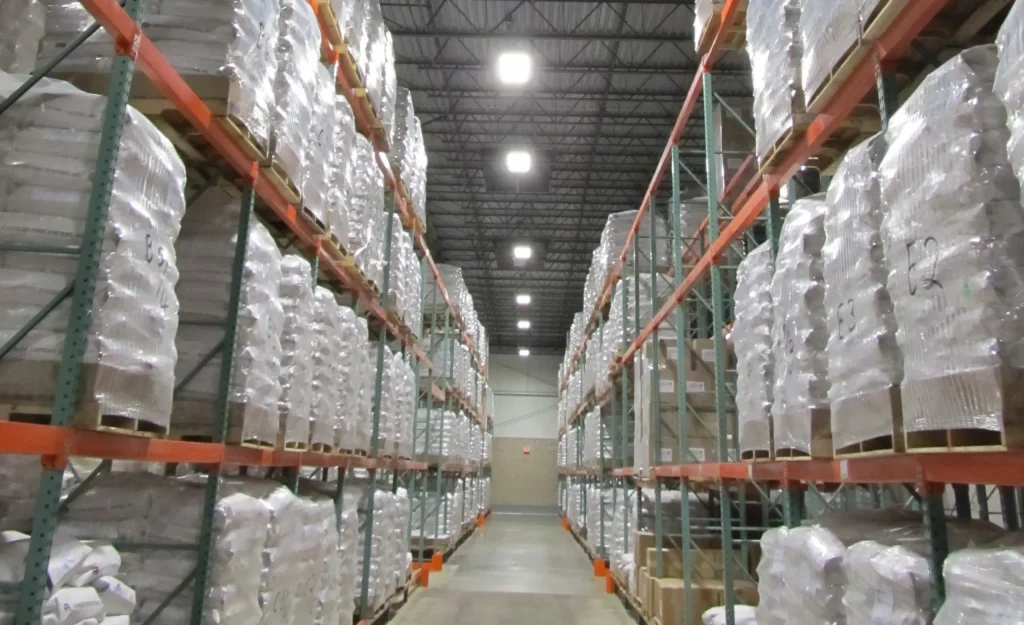
Cold storage retrofit cost varies more than most procurement guides acknowledge. The headline range we use in early conversations is $60,000 to $600,000, but that range covers facility types with very different specification requirements and the differences matter for budget planning. Cost per fixture in cold storage is also higher than in ambient warehouses because the fixtures themselves are engineered for cold operation, the installation labor is more expensive due to the operating environment, and the project specification work involves coordination with food safety, refrigeration, and facility engineering teams that ambient warehouse projects do not require.
Small refrigerated coolers, walk-ins, and floral or produce holding rooms typically range from 500 to 3,000 square feet with ceiling heights of 10 to 18 feet. The fixture choice is usually our LED Linear Vapor Tight family in 2-foot or 4-foot configurations, or our Sealed Face Troffer in 1×4 or 2×4 sizes for finished ceiling installations. Fixture count typically runs 4 to 12 fixtures depending on room size and target footcandle level. Total project cost for small cooler retrofits typically lands in the $6,000 to $30,000 range including fixtures, controls, electrical work, and installation labor.
Mid-size refrigerated distribution warehouses typically range from 30,000 to 150,000 square feet with ceiling heights of 25 to 40 feet for high-rack storage. The fixture choice is our Cold Linear High Bay in 2-foot or 4-foot configurations, sized at 85 to 300 watts depending on ceiling height and target footcandle level. Fixture count typically runs 60 to 250 high bays across the main storage zones, plus additional fixtures for staging, dock, and ancillary areas. Total project cost for refrigerated distribution warehouse retrofits typically lands in the $150,000 to $400,000 range including fixtures, networked dimming controls, electrical work, and installation labor.
Large frozen and blast freezer distribution facilities typically range from 60,000 to 250,000 square feet with the same ceiling height profiles as refrigerated warehouses. The fixture specification is similar but the cold-rated driver requirements are stricter and the photometric design needs to account for the higher refrigeration multiplier when sizing the lighting system. Fixture count for a 100,000 square foot frozen facility typically runs 100 to 200 cold-rated high bays. Total project cost for frozen distribution warehouse retrofits typically lands in the $250,000 to $600,000 range, with the higher end reflecting facilities running at blast freezer temperatures or hosting multiple thermal zones with different fixture specifications.
Food processing facilities operating wet sanitation environments require IP69 or NEMA 4X rated fixtures, which carry a 25 to 60 percent cost premium over standard cold storage fixtures. Facility square footage varies widely (small processors are 5,000 to 20,000 square feet; large meat or dairy plants are 50,000 to 300,000 square feet), and the fixture mix typically combines our IP69-rated Vapor Tights for processing lines and washdown corridors with Sealed Face Troffers for inspection stations and finished-ceiling areas. Total project cost for food processing retrofits typically lands in the $100,000 to $500,000 range, depending on processing line count, sanitation regime intensity, and any USDA FSIS inspection station requirements.
Pharmaceutical cold storage projects operating at 2-8°C and below carry the highest specification requirements and the most extensive documentation burden. Smaller pharma facilities (cleanrooms, vaccine storage, biotech labs) typically range from 1,000 to 10,000 square feet and cost $25,000 to $150,000 for a complete retrofit. Larger pharma distribution facilities and ultra-low temperature applications can run $150,000 to $750,000 or more, with the premium reflecting NSF P442 sealed-face troffer specifications, validation and qualification documentation, and (for ULT applications below negative 40°F) remote-driver configurations to protect electronics from the conditioned environment. The full specification depth for pharma applications is covered in our companion guide on pharmaceutical cold storage lighting compliance and ultra-low temperature considerations.
Within those facility-type ranges, the specific cost of any individual project depends on a few key variables. Fixture quantity and configuration is the dominant cost variable; a standard 100,000 square foot freezer requires roughly 100 to 200 cold high bays depending on ceiling height and target footcandle level. Sanitation regime determines the IP rating required, and IP69 or NEMA 4X fixtures carry a 25 to 60 percent premium over IP66. Controls integration scope ranges from basic occupancy sensors and on/off scheduling at the low end to fully networked wireless dimming with daylight harvesting at the high end. The detailed engineering reasons behind these IP ratings are covered in our companion guide on IP66, IP67, IP69, and IP69K ratings in cold storage and washdown environments. Electrical work and circuit configuration can range from $10,000 for simple replacements with existing circuits to $75,000 or more when controls integration or new electrical drops are required. Installation labor in cold environments carries a roughly 25 to 40 percent premium over ambient installation rates because of mandatory worker warm-up breaks, slower hydraulic equipment performance, and the need for cold-rated lift batteries. Existing fixture removal and disposal, particularly for older HID fixtures containing PCB ballasts or mercury vapor lamps requiring specialized disposal, adds $3,000 to $20,000 depending on fixture count and disposal complexity.
Most cold storage payback calculations focus exclusively on direct lighting energy reduction, which produces conservative payback estimates of three to five years. The complete payback picture includes five drivers, only one of which is direct energy savings. Modeling all five drivers typically produces payback estimates in the twelve to twenty-four month range for cold storage retrofits. The five-driver model is structurally the same framework we use for K-12 gymnasium retrofits, but the relative weight of each driver shifts in cold storage because the refrigeration multiplier dominates the financial picture in ways that simply do not apply to ambient applications.
Replacing legacy 400-watt metal halide high bays (typically 460 watts including ballast losses) with our 150-watt to 200-watt Cold Linear High Bay LEDs delivers approximately 55 to 65 percent reduction in direct lighting power consumption at the same or improved light levels. Older T8 fluorescent and HPS replacements show similar reductions. Annual energy savings from this driver alone typically run $2,000 to $25,000 per project depending on fixture count, run hours (most cold storage facilities operate continuously at 8,760 hours per year), and local electricity rates. For background on how lumens per watt translates to actual fixture performance and savings, our efficacy versus efficiency guide covers the underlying performance metrics.
This is the financial driver that makes cold storage retrofits structurally different from ambient warehouse retrofits. Every watt of lighting energy reduced is also a watt of heat load removed from the conditioned space, which means the compressor consumes less electricity to maintain temperature. The savings ratio is set by the refrigeration system’s Coefficient of Performance, with freezer multipliers typically running 1.36 to 1.50 and blast freezer multipliers running 1.50 to 1.77. A retrofit saving $10,000 per year in direct lighting energy typically delivers an additional $3,600 to $7,700 per year in compressor energy savings, for a total energy line of $13,600 to $17,700 per year. The complete thermodynamic argument and worked examples are in our companion guide on the refrigeration multiplier in cold storage LED lighting, and this driver is typically the largest single contributor to the total return picture.
For facilities where refrigeration system capacity is at or near design ceiling, removing lighting heat load returns compressor capacity to the system. One ton of refrigeration equals 3,517 watts of cooling capacity, and removing 5,000 watts of lighting heat load returns about 1.4 tons of compressor capacity. Installed compressor capacity carries an implied value of $1,000 to $3,000 per ton, so a typical cold storage retrofit returning 1 to 3 tons of capacity carries an implied capital value of $1,000 to $9,000 that does not appear in energy savings calculations. This driver is most valuable for facilities considering refrigeration system expansion to support new throughput, because the reclaimed capacity can defer or eliminate the expansion entirely.
Maintenance in a sub-zero environment is structurally more expensive than ambient maintenance, and the difference adds up over the operating life of a fixture. Battery-electric scissor lifts lose roughly 50 percent of their charge capacity in cold temperatures and hydraulic fluid thickens, causing sluggish operation. Technicians require mandatory 15-minute warm-up breaks every hour, increasing labor costs by 25 percent or more compared to ambient lift access. Lift rental and electrician labor for a single fixture replacement in a freezer typically costs $150 to $400 per event, compared to $45 to $75 in ambient applications. Engineered cold storage LED fixtures rated for 100,000+ hours L70 effectively eliminate routine relamping cycles for a decade or more, which means the freezer-tax maintenance line goes to zero rather than to a reduced amount. Annual eliminated maintenance savings typically run $3,000 to $15,000 per cold storage facility, with the value concentrated in years 3, 6, 9, and 12 when legacy relamping cycles would otherwise have occurred.
Cold storage facilities typically have lower occupancy than the 24/7 run hours suggest, with extended periods of low or zero occupancy in storage aisles and bulk zones. Networked dimming controls that drop fixture output to 10 to 20 percent during low-occupancy periods produce energy savings at the multiplier-amplified rate, which means controls integration in cold storage pays back significantly faster than the same controls would in ambient warehouses. Our TruBlu Mesh wireless lighting controls integrate with cold storage fixtures without additional control wiring, eliminating the conduit pulling that traditional 0-10V control systems require. Annual savings from this driver typically run $2,000 to $12,000 per facility depending on occupancy profile and the multiplier-amplified savings rate.
Total annual savings from a complete cold storage retrofit typically run $10,000 to $80,000 per facility when all five drivers are modeled, plus the reclaimed capacity value where applicable. For a $250,000 refrigerated distribution warehouse retrofit, the resulting payback period typically lands in the eighteen to thirty month range from energy alone, dropping into the twelve to twenty month range once eliminated maintenance is included, and into single-digit months for projects capturing the full Section 179D deduction and applicable utility rebates. Finance teams running energy-only payback calculations consistently underestimate payback duration because they miss the multiplier, the maintenance, the reclaimed capacity, and the controls drivers that collectively produce more financial value than direct lighting energy savings alone.
Cold storage retrofit projects have access to several federal funding pathways that can materially reduce net project cost. The landscape changed significantly in 2025 and 2026 with the passage of the One Big Beautiful Bill Act and continued evolution of USDA REAP funding rules, so operators planning 2026 projects need current information rather than guidance from older planning documents.
The Internal Revenue Code Section 179D deduction provides federal tax deductions for placing energy-efficient property in service in commercial buildings, including LED lighting upgrades in cold storage facilities. As detailed by the Department of Energy’s 179D resource page, the deduction was substantially amended by the Inflation Reduction Act, with deduction amounts of $0.50 to $1.00 per square foot for property meeting only the energy criterion, and $2.50 to $5.00 per square foot for property meeting all 179D criteria including prevailing wage and apprenticeship requirements. To qualify, the property must achieve at least 25 percent energy savings against the applicable ASHRAE baseline, with the deduction amount scaling upward as energy savings increase.
The critical timing issue: the One Big Beautiful Bill Act, enacted in July 2025, added a termination provision that ends 179D for property the construction of which begins after June 30, 2026. Cold storage operators planning retrofit projects in 2026 should structure construction-start dates before this deadline to preserve 179D eligibility. For a typical 100,000 square foot refrigerated distribution warehouse, the 179D deduction can be worth $50,000 to $500,000 depending on which criteria the project meets, which is large enough to materially affect project ROI and capital justification. Operators should engage their tax advisors and lighting designers early to confirm 179D documentation requirements and ASHRAE 90.1 baseline modeling can be completed within the project timeline.
USDA REAP provides grants and guaranteed loans to agricultural producers and rural small businesses for renewable energy systems and energy efficiency improvements, including LED lighting retrofits in qualifying cold storage facilities. As detailed by the USDA Rural Development REAP page, the program is authorized for Fiscal Years 2025, 2026, and 2027 under a multi-year Notice of Funding Opportunity. Energy efficiency grants are available with a $1,500 minimum and $500,000 maximum per project, with cost share that has historically been up to 50 percent of eligible project costs for projects funded with IRA dollars.
A few important caveats for 2026 planning. The program paused new grant applications in mid-2025 due to backlog, with FY2026 applications reopening October 1, 2025. The Inflation Reduction Act funding component is winding down, and the cost share for some funding tracks is shifting from the IRA-era 50 percent toward the base Farm Bill 25 percent for FY2026 and beyond. USDA has also indicated changes in scoring priorities, particularly around solar siting on productive farmland, that may affect application strategy for projects combining lighting upgrades with renewable energy. Cold storage operators in qualifying rural areas should engage with their state USDA Rural Development Energy Coordinator early in the project planning process to confirm current eligibility, application deadlines, and cost-share levels before locking in capital assumptions based on older REAP information.
Most US utilities offer commercial lighting rebates for qualifying LED retrofits, and cold storage retrofits frequently qualify for enhanced incentive payouts compared to ambient warehouse projects. The standard eligibility reference is the DesignLights Consortium Qualified Products List, with the higher DLC Premium tier typically required to unlock maximum rebate values. Cold storage retrofits often qualify for custom utility incentive programs that calculate rebates based on measured or modeled total facility energy savings rather than prescriptive per-fixture amounts, and custom programs can include the refrigeration multiplier compressor savings in their incentive calculation. The result is that custom utility rebate captures of 20 to 50 percent of total project cost are achievable for cold storage retrofits in many service territories, compared to 5 to 15 percent for prescriptive ambient warehouse rebates.
Operators planning cold storage retrofits should engage their utility’s commercial incentive program early, ideally before fixture selection is finalized, to confirm rebate eligibility requirements and capture the higher custom incentive levels the multiplier supports.
Several states have their own commercial energy efficiency incentive programs that layer on top of federal pathways. California’s commercial cold storage facilities have access to the California Energy Commission and CPUC-administered programs through the IOUs. New York facilities have access to NYSERDA commercial efficiency programs. Texas has utility-administered programs through the major IOUs. The structure varies by state, but the general pattern is that cold storage operators in high-electricity-rate states tend to have stronger state-level rebate stacking opportunities than operators in lower-rate states. Project teams should investigate state and local programs alongside federal pathways during the funding identification phase.
Cold storage retrofit projects funded through federal infrastructure programs, USDA REAP grants, or other federal pass-through funding pathways require Buy American Act (BAA) and Build America, Buy America (BABA) Act compliance for the manufactured products specified in the project. The compliance requirements affect fixture selection and procurement documentation in specific ways that operators need to address before bid documentation goes out.
BABA, established by the Infrastructure Investment and Jobs Act in 2021, requires that the cost of components manufactured in the United States exceed 55 percent of the total cost of all components, and that final assembly occur in the United States. BAA, the older statute that BABA builds upon, applies to direct federal procurement and sets similar but distinct domestic content standards. Most federal funding pathways affecting cold storage facilities use BABA as the primary compliance framework, with BAA applicable to specific direct federal contracts. Our cold storage fixtures are compliant with BAA and BABA requirements for federally-funded projects, with final assembly in Auburn, California and domestic content meeting the 55 percent threshold. Documentation is available on request, and we typically ship the compliance package alongside fixture cutsheets for any federally-funded project. Detailed information on the documentation we provide is available on our BAA / BABA Compliance page.
For a cold storage retrofit funded through any federal pathway, the procurement documentation typically needs to include the fixture manufacturer certification of BAA/BABA compliance with specific domestic content percentages, a statement of final assembly location, identification of any waivered components, and bid documentation language requiring BAA/BABA compliance from all responding bidders. Operators pursuing federal funding should request the compliance package from candidate fixture manufacturers early in the procurement process so that bid documentation can incorporate the required language up front, rather than discovering compliance gaps after contract award.
Many commercial LED fixtures sold in the US market are imported or assembled with significant foreign-manufactured component costs that exceed the BABA threshold. Operators pursuing federal funding should specifically verify BAA/BABA compliance with their selected fixture manufacturer rather than assuming compliance based on the manufacturer’s domestic presence, marketing, or general claims of US manufacturing. The compliance threshold is a specific percentage with specific documentation requirements, not a general representation.
Cold storage retrofit procurement is more complex than ambient warehouse procurement because it typically involves coordination across more stakeholders, more compliance documentation, and tighter scheduling constraints around facility operations.
A typical cold storage retrofit involves the facility manager or maintenance director who identifies the project need and manages contractor coordination during installation; the refrigeration engineer or plant engineer who provides the system COP data and validates that the lighting heat load reduction is consistent with refrigeration system capacity; the food safety or QA director for food processing facilities who validates sanitation compliance and audit-ready documentation; the procurement or operations director who manages the bid process and contract award; the corporate finance team who reviews the capital justification and payback analysis; and for federally-funded or pharma-validated projects, the compliance and validation teams who handle BAA/BABA documentation and GMP qualification requirements. The number of stakeholders is usually larger than for ambient projects and the documentation expectations are higher.
From initial project identification to fixture installation, a cold storage retrofit typically takes 4 to 12 months. The phases are roughly: months 1-2 for project scoping, photometric layout development, preliminary cost estimation, and funding pathway identification; months 2-4 for fixture specification, internal approvals, and formal bid documentation; months 4-6 for the bid process, contract award, and ordering of fixtures and controls; and months 6-9 for installation, commissioning, and training. Federally-funded projects and projects requiring BAA/BABA compliance documentation typically add 2 to 4 months for grant compliance documentation. Food processing and pharma projects requiring additional sanitation or validation documentation typically add 2 to 6 months for the documentation work and any required qualification protocols.
Cold storage facilities cannot easily shut down for installation. Product moves continuously through distribution facilities, food processing lines operate on production schedules with limited downtime windows, and pharma facilities maintain temperature control 24/7 to protect product integrity. Cold storage retrofit installation is typically phased across multiple work windows, with crews completing one zone or aisle at a time rather than the entire facility at once. The phased approach extends total project duration but minimizes operational disruption, which is usually the right tradeoff for facilities with continuous operations.
For facilities operating multiple thermal zones (refrigerated and frozen sections under one roof, for example), the phased approach also allows the contractor to handle the warmer zones first and gain familiarity with the facility’s specific challenges before tackling the colder, more demanding zones. The freezer-tax maintenance reality applies equally to installation labor; technicians work in 45-minute productive cycles separated by 15-minute warm-up breaks, and installation pace runs roughly 60 to 75 percent of ambient warehouse productivity. This factors into both installation cost and project schedule.
The bid documentation for a cold storage retrofit determines whether the operator receives competitive bids that align with the project’s actual requirements or receives a wide range of unequal bids that complicate selection. Three documentation strategies improve bid quality.
First, specify the cold-rated driver requirement explicitly. Many commercial LED fixtures will start in cold environments under controlled conditions but fail within months due to electrolytic capacitor degradation. Specifying solid polymer or ceramic capacitor drivers rated to negative 40°F cold start eliminates fixtures that look comparable on spec sheets but will not survive the environment.
Second, specify the IP rating and sanitation requirements appropriate to the facility zone. Different zones in the same facility may have different requirements (IP66 for general cold storage, IP69 for processing line washdown, NSF/ANSI 2 for food contact zones), and zone-by-zone specification prevents contractors from quoting a single mid-tier fixture across all zones at the cost of compliance in the most demanding zones.
Third, require BAA/BABA compliance documentation from all bidders for federally-funded projects. This eliminates non-compliant bidders early in the process rather than discovering compliance gaps after contract award. The same principle applies to food processing facilities requiring NSF/ANSI 2 compliance and pharma facilities requiring NSF P442 sealed-face protocol documentation.
The temptation in any retrofit procurement is to specify the cheapest fixture that meets minimum spec sheet requirements. In ambient warehouses, this approach produces suboptimal but functional installations. In cold storage, this approach produces installations that fail within months, and the cost of replacing failed fixtures usually exceeds the capital savings of underspecifying the first time by several multiples.
The structural problem is that cold storage environments expose every weak point in fixture design. Standard drivers freeze. Standard gaskets crack from thermal cycling. Standard housings condense moisture during defrost cycles. Standard motion sensors fail to detect workers in thermal suits. Standard emergency lighting batteries die in the cold. Each of these failure modes is a known engineering problem with a known solution, and each adds incremental cost to fixture specification. Cold storage fixtures cost 25 to 60 percent more than ambient fixtures because they include the engineering solutions for each of these failure modes. The price premium is not arbitrary; it represents the difference between a fixture that survives the environment and a fixture that does not.
When a cold storage installation specifies ambient-rated fixtures, the financial outcome typically follows a predictable pattern. The fixtures install for less than the engineered alternative. They operate normally for the first three to nine months. Drivers begin failing in the first winter cycle. Replacement labor costs run $150 to $400 per fixture in freezer access. Within eighteen to thirty months, the operator has paid the original installation cost plus a complete second installation cost, for a total project spend that exceeds what the engineered specification would have cost by 30 to 50 percent. The energy savings during this period are real but the payback math is destroyed by the catastrophic maintenance overrun. Operators who have lived through this experience once typically do not repeat it; operators considering their first cold storage retrofit benefit from knowing the pattern before they have to live through it themselves.
The complete failure mode catalog, with engineering reasons each matters and how engineered cold storage fixtures address each one, is covered in detail in our companion guide on IP66, IP67, IP69, and IP69K ratings in cold storage and washdown environments.
Total project cost for cold storage LED retrofits typically ranges from $6,000 for small walk-in coolers to $600,000 for large frozen distribution facilities. Refrigerated distribution warehouse retrofits typically land in the $150,000 to $400,000 range. Food processing facilities requiring IP69 washdown-rated fixtures typically run $100,000 to $500,000. Pharmaceutical cold storage facilities run $25,000 to $750,000 depending on temperature range and validation requirements. For a specific cost estimate, send us your facility dimensions, operating temperature, and intended use and we can model the project scope.
From initial project identification to fixture installation typically takes 4 to 12 months for cold storage retrofits. Federally-funded projects requiring BAA/BABA compliance documentation typically add 2 to 4 months. Food processing and pharma projects requiring sanitation or validation documentation typically add 2 to 6 months. The installation itself is usually phased across multiple work windows to minimize operational disruption, and installation pace in cold environments runs 60 to 75 percent of ambient warehouse productivity due to mandatory worker warm-up breaks.
Yes. Our cold storage product family is compliant with the Buy American Act (BAA) and Build America, Buy America (BABA) Act for federally-funded projects. Final assembly occurs in Auburn, California with domestic content meeting the 55 percent threshold required for BABA-compliant manufactured products. Compliance documentation is available on request for any federally-funded project, and the package typically ships alongside fixture cutsheets so the bid documentation can incorporate compliance language from the start.
Twelve to twenty-four months is the typical payback period for cold storage retrofits when all five financial drivers are modeled (direct lighting energy, refrigeration multiplier savings, reclaimed compressor capacity, eliminated freezer-tax maintenance, and integrated wireless controls). Energy-only payback calculations typically produce conservative estimates in the three to five year range and significantly underestimate the actual financial value of the retrofit. The five-driver model with the refrigeration multiplier is the appropriate financial framework for cold storage capital review.
Yes, but with a hard deadline. The One Big Beautiful Bill Act enacted in July 2025 added a termination provision that ends Section 179D for property the construction of which begins after June 30, 2026. Cold storage operators planning retrofit projects in 2026 should structure construction-start dates before this deadline to preserve 179D eligibility, which can be worth $0.50 to $5.00 per square foot of building area depending on energy savings achieved and whether prevailing wage and apprenticeship criteria are met. For a 100,000 square foot facility, this is $50,000 to $500,000 in tax deduction value that disappears for projects starting after June 30, 2026. Operators should engage tax advisors and lighting designers immediately if they want to capture the 179D deduction for 2026 projects.
Possibly, if the facility is in a qualifying rural area and the operator meets the eligibility criteria (agricultural producer with at least 50 percent of income from agricultural operations, or rural small business meeting SBA size standards). REAP is authorized for Fiscal Years 2025, 2026, and 2027 with energy efficiency grants up to $500,000 per project and historic cost share of up to 50 percent for IRA-funded projects. The program paused grant applications in mid-2025 due to backlog, with FY2026 applications reopening October 2025, and the cost share for some funding tracks is shifting toward the Farm Bill 25 percent baseline. Operators should engage with their state USDA Rural Development Energy Coordinator early to confirm current eligibility, application deadlines, and cost-share levels.
Most US commercial utilities offer rebates for qualifying LED retrofits, and cold storage retrofits frequently qualify for enhanced custom incentive payouts because the refrigeration multiplier savings can be included in the rebate calculation. Custom utility rebate captures of 20 to 50 percent of total project cost are achievable in many service territories. The DesignLights Consortium Premium qualified product list is typically the eligibility reference, and operators should engage their utility’s commercial incentive program before fixture selection is finalized to capture the higher custom incentive levels the multiplier supports.
Less disruptive than most operators expect, when properly phased. Cold storage retrofit installation is typically scheduled across multiple work windows with crews completing one zone or aisle at a time, which extends total project duration but minimizes operational disruption. Most retrofits proceed alongside continuous facility operation, with limited zone-by-zone shutdowns scheduled around production and distribution requirements. The installation contractor coordinates with facility scheduling to identify the lowest-impact windows for each zone.
Almost always yes. The labor and lift access cost of adding controls during initial fixture installation is significantly less than retrofitting controls into existing fixtures later. The energy savings from controls are amplified by the refrigeration multiplier, which means controls pay back faster in cold storage than the same controls would in ambient applications. For most cold storage retrofits, integrated controls add 10 to 20 percent to project cost but produce 30 to 50 percent additional energy savings on top of the fixture conversion baseline, which makes them the highest-leverage component of the project from an ROI standpoint.
Specify each zone independently with the appropriate fixture for that zone’s specific requirements. A typical food distribution facility might have refrigerated zones using standard IP66 cold high bays, frozen zones using cold-rated high bays with negative 40°F cold start drivers, processing lines using IP69 NSF/ANSI 2 vapor tights, and inspection stations using sealed-face troffers. Treating the facility as multiple specifications rather than a single fixture choice prevents the common procurement error of specifying a single mid-tier fixture across all zones at the cost of compliance in the most demanding zones.
Cold storage retrofits are substantial capital projects that affect operations, energy budgets, refrigeration system capacity, and (for many facilities) food safety or pharma compliance simultaneously. The decisions you make during project scoping shape outcomes for the next decade or longer. Specifying engineered cold-rated fixtures up front, modeling the complete five-driver financial picture rather than energy-only payback, identifying the right funding pathway early, and structuring construction-start timing to preserve Section 179D eligibility for 2026 projects are the four steps that separate well-executed retrofits from projects that produce maintenance issues, missed incentives, and ROI shortfalls.
We have been engineering cold storage lighting fixtures and modeling cold storage retrofit projects since 1993. Send us your facility dimensions, operating temperature, current lighting inventory, run hours, refrigeration system documentation if available, and any federal funding pathway you are pursuing. We will prepare a free photometric layout showing the recommended cold storage fixture configuration, photometric performance verification appropriate to the application, BAA/BABA compliance documentation for federally-funded projects, and a multiplier-adjusted five-driver financial model that can be presented directly to capital review. For projects involving food processing washdown specification, pharma validation, ultra-low temperature applications, or other application-specific requirements beyond standard cold storage, contact our engineering team directly. The retrofit math is the headline, but the full specification and procurement work is what makes the retrofit deliver its promised return across the fixture’s full operating life.